
Buying solid oak furniture isn’t like grabbing a set of cushions on a whim. It’s a proper investment, the kind of thing you live with for decades, which is precisely why getting it wrong stings so much. Order badly and you’ll end up with a sideboard that won’t clear your hallway, a dining table that turns up two months late, or a piece that looks nothing like the warm, grainy timber you thought you’d paid for.
I’ve watched people make all five of these mistakes. Some of them I’ve nearly made myself. So this is a walk through the pitfalls buyers fall into when they’re shopping for oak online, and how to sidestep the ones that cost you time, money and a fair bit of your sanity.
The thing about oak is that it’s meant to outlive you. It might get handed down. That means the choices you make at the checkout matter far more than they would with flat-pack rubbish you’ll bin in three years. So let’s go through what tends to go wrong.
Table of Contents
- Mistake 1: Ignoring Oak Wood Grade and Quality Markers
- Mistake 2: Skipping Proper Room Measurements
- Mistake 3: Expecting Unrealistic Delivery Timeframes
- Mistake 4: Overlooking Long-Term Maintenance and Care
- Mistake 5: Prioritising Style Over Functionality and Family Legacy
- How to Avoid Furniture Mistakes When Buying Oak Online
- FAQs
Mistake 1: Not Actually Knowing What “Oak” Means
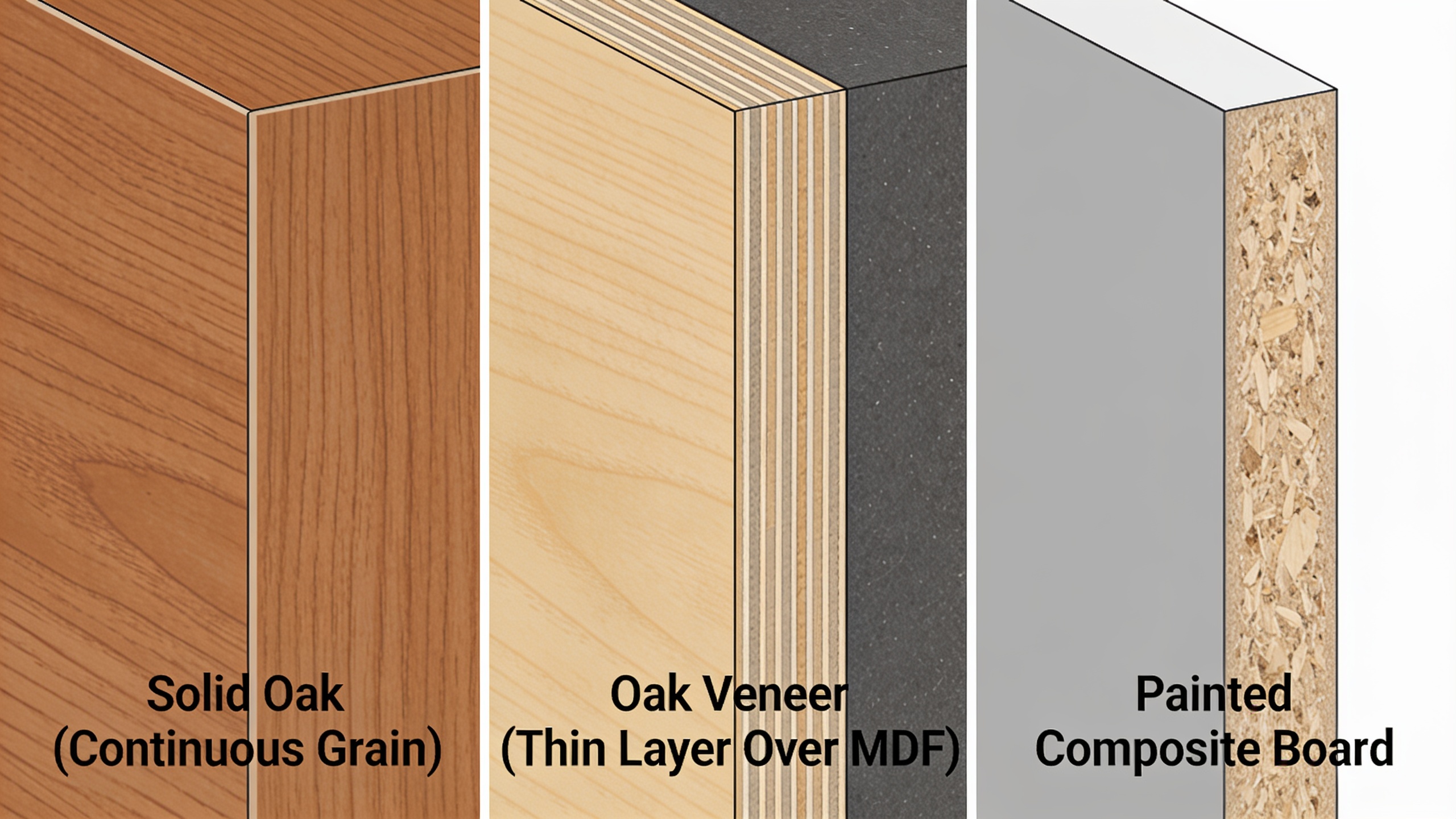
The single biggest mistake is not checking what “oak” actually refers to on the piece you’re buying. And I mean this literally, because “oak” gets used to describe everything from solid, high-grade timber right down to a wafer-thin oak veneer glued over cheap composite board. The difference in how long it lasts, how heavy it feels, and whether you can ever repair it is enormous.
Solid oak furniture is built from timber cut and joined as whole boards. The grain runs right through the piece, and you can sand it, repair it, or refinish it over and over across decades. Oak veneer is a different animal. It’s a thin layer of real oak bonded onto an engineered core like MDF or chipboard. Looks convincing in a photo, sure. But scratch it, get it damp, or shove it around your house a few times and it behaves nothing like the real thing.
Now, neither one is “wrong.” Veneer has its place if you’re on a budget. The mistake is buying one thinking you’re getting the other.
When you’re shopping online, hunt for explicit language about construction. Any decent retailer will tell you plainly whether a piece is solid oak throughout or veneer on an engineered base. And honestly? If a listing is cagey about this, that vagueness tells you everything. Check the joinery too. Dovetail joints, mortise and tenon construction, solid drawer bases, those are the fingerprints of proper craftsmanship. Don’t judge by the finish alone, because a good oil or stain can make almost any old timber look gorgeous under studio lighting.
| Feature | Solid Oak | Oak Veneer | Painted/MDF with Oak Trim |
|---|---|---|---|
| Core material | Solid oak throughout | Engineered board with oak surface layer | Composite board, minimal real oak |
| Typical lifespan | Decades, often generational | Shorter; vulnerable if surface is damaged | Shortest of the three |
| Repairability | Can be sanded and refinished multiple times | Limited; veneer damage is hard to fix | Very limited |
| Weight | Heavier, denser | Lighter | Lightest |
| Typical use case | Heirloom pieces, high-use furniture | Budget-conscious buyers wanting an oak look | Painted bedroom or accent furniture |
If this is your first proper solid wood purchase, it’s genuinely worth reading a broader oak furniture buying guide for first-time homeowners before you commit to a collection. Once the grading and construction jargon clicks, every other decision gets easier.
Mistake 2: Winging the Measurements
Buying oak without measuring your room properly is the most avoidable mistake on this list, and somehow one of the most common. Oak pieces are solid, heavy, and a nightmare to return. A sideboard that’s 15cm too long for the wall, or a dining table that leaves no room to pull the chairs out, becomes an expensive, sulking lump of timber in your living room.
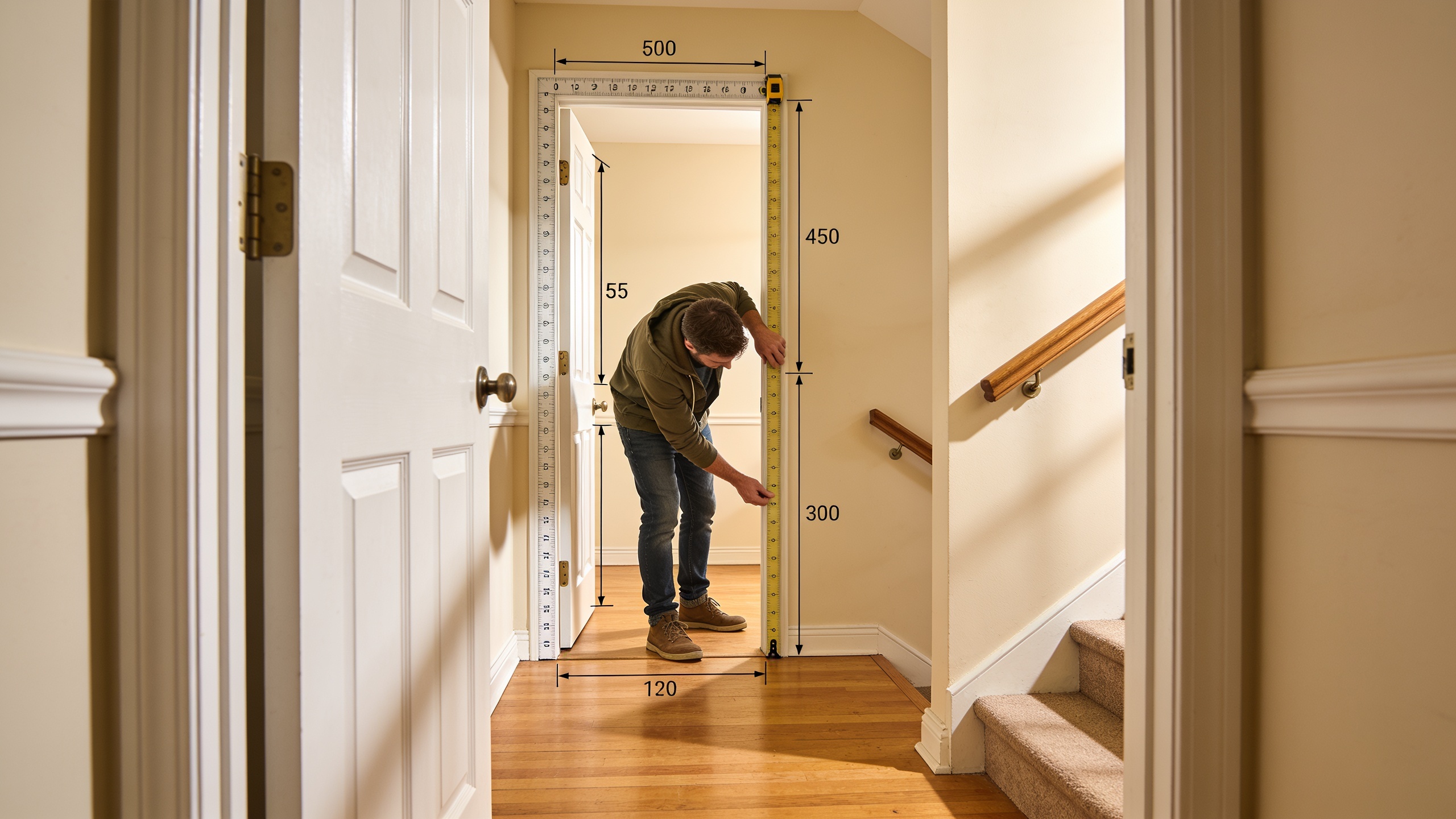
Here’s what usually trips people up. It’s rarely that they forget to measure at all. It’s that they measure the width of a wall and forget everything else. Depth. Door swing. The staircase. The width of the hallway you’ve actually got to carry the thing through. A dining table might fit against the wall on paper, but if it won’t come through the front door or up a narrow stair, that measurement was never the whole story. Same with wardrobes. People measure the floor footprint and completely forget the doors need clearance to open, or that a raised back or cornice eats into the ceiling height.
So before you order, measure the exact spot the item will sit. Then measure the route to get it there. Front door width, hallway turns, staircases, any awkward corners. Delivery teams generally can’t promise they’ll get an oversized piece into a room if the access simply isn’t there, and no amount of grunting will change the laws of physics.
Leave yourself some breathing room too. For dining spaces, aim for around 90cm behind the chairs so people can actually get up without a fight. For bedroom furniture, make sure doors and drawers can open fully. Our guide on how to measure your room for the perfect oak furniture fit runs through exactly what to check before anything goes in your basket.
Mistake 3: Assuming It’ll Turn Up on Tuesday
Solid oak takes longer to deliver than flat-pack, full stop, and assuming otherwise is a fast track to disappointment. These pieces are heavy, often handcrafted, and usually need careful handling or a two-person team to get them through your door. That means delivery windows are longer and a lot less flexible than the mass-produced stuff shipped in flat boxes.
The mistake cuts both ways, actually. Some people assume furniture always arrives in a couple of days, the way a set of coasters might, and get blindsided when a made-to-order oak piece takes weeks. Others see “in stock” and assume that means it’ll land on a fixed date no matter how bulky it is or how tricky their postcode is to reach. But solid oak dining tables, wardrobes and sideboards are heavy, awkward things, and that naturally limits how fast courier networks can slot them into a schedule.
The fix is simple enough. Check the estimated delivery windows before you buy. Ask outright whether the piece is made-to-order or sitting in a warehouse. And this is the big one, don’t buy oak against a tight deadline like a moving date or a party unless the retailer has flat-out confirmed they can hit it. If you’re planning around a fixed date, build in a buffer of at least a few extra weeks. Big items are far more prone to courier scheduling delays than small parcels, and Sod’s law being what it is, they’ll pick the worst possible week to slip.
Mistake 4: Treating Oak Like It Looks After Itself
Oak rewards a bit of care and quietly punishes neglect, so assuming it’s maintenance-free is a mistake that shaves years off an otherwise brilliant piece. Yes, it’s a hardwood, and yes, that makes it far tougher than softer timbers. But it still reacts to humidity, sunlight, and how you clean it.
Solid oak expands and contracts a little as the temperature and humidity shift through the year. That’s just what wood does. It’s why pieces parked too close to a radiator, in blazing direct sun, or beside a draughty back door can end up with uneven finishes, tiny cracks, or a bit of warping over time. Harsh chemical cleaners, silicone polishes and too much water are the other culprits. They strip the protective oils or waxes and dull the very grain you fell for in the first place.
None of this makes oak fragile, mind. Quite the opposite. It’s chosen precisely because it’s dense and long-wearing. It just means a small amount of ongoing care comes with the territory.
Before you buy, check what finish the piece has (oiled, waxed, or lacquered), because each one wants slightly different treatment. If the product page doesn’t say, ask. The people who end up disappointed a few years down the line usually aren’t victims of faulty furniture. They just didn’t give it the little bit of looking-after that solid wood asks for.
Mistake 5: Buying for the Photo, Not the Decade
Choosing oak purely because it photographs beautifully misses the entire point of buying solid wood: it’s supposed to last. People buy oak with the intention of keeping it for years, often decades, sometimes to pass it down. Which means how a piece functions, how much it stores, and how you’ll actually use the room in five or ten years matters every bit as much as how it looks on delivery day.
You see this play out in painfully practical ways. A gorgeous sideboard with barely any usable storage for a growing family. A dining table sized for two that can’t stretch to accommodate the kids you’ll have by 2028. A whole bedroom set bought off the back of a trend that dates the moment your taste shifts. Rustic and modern oak can both age wonderfully, but only if the underlying piece was chosen for real life rather than a single styled photograph.
And there’s a softer, more sentimental layer here too, one worth sitting with. A lot of families choose solid oak specifically because it’s meant to be handed down, right alongside the other things worth preserving for the next generation.
How to Avoid Furniture Mistakes When Buying Oak Online
You dodge these mistakes by treating an oak purchase as a considered, multi-step decision rather than a single click: check the construction, measure properly, confirm a realistic delivery timeline, understand the care it needs, and buy for how the room will actually be used. And notice how the five mistakes feed off each other. A badly measured room makes delivery day a nightmare. Unclear wood grade makes care impossible to plan. Buying on looks alone means you don’t spot the functionality gap until it’s too late to fix.
The single most useful habit? Slow the whole thing down on purpose. Before a big oak item lands in your basket, spend ten minutes re-measuring the room, re-reading the description for construction and material details, and checking the delivery window against your own diary. Doesn’t matter whether you’re a family furnishing a forever home, a designer sourcing for a client, or a first-time buyer kitting out an empty flat. The same discipline serves all of you, even if your reasons differ. Designers are usually juggling a client’s aesthetic brief against delivery windows across a whole project. Families are weighing durability against a budget that has to stretch. Different worries, same slow-down.
Read independent reviews where you can find them. Check whether the retailer actually specifies handcrafted construction or high-grade solid oak, in plain words rather than fluffy marketing. And ask direct questions about grading, joinery and finish if the listing leaves you guessing. Oak is meant to be a considered purchase. Treating it that way from the start is, when it comes down to it, the simplest way to never make any of these mistakes at all.
FAQs
What’s the most common mistake people make buying oak furniture online?
Not checking whether a piece is genuinely solid oak or just veneer over engineered board. Photos alone almost never tell you the difference. Read the full description, and if it’s unclear, just ask the retailer straight out about the construction. Saves a lot of heartache later.
How do I know if oak furniture will actually fit through my doorways?
Measure the delivery route, not just the spot where the furniture will sit. Door widths, hallway turns, staircases, tight corners, all of it. Solid oak is heavy and rigid, so unlike flat-pack, you can’t angle or squeeze it through a gap that’s a shade too small.
Why does oak take so much longer to deliver than other furniture?
Solid oak pieces are heavy, often made to order or handcrafted, and frequently need a two-person team to move safely, which all stretches out delivery times compared with lightweight flat-pack. Confirm the estimated window before you buy, especially if you’re tied to a moving or event date.
Does solid oak really need special maintenance?
It needs modest but consistent care. Keep it away from direct heat and strong sunlight, and use products suited to its finish (oiled, waxed, or lacquered). It’s not high-maintenance by any stretch, but ignore the basics and you can end up with uneven finishes or cracking over time.
Is oak furniture a good long-term investment for a family home?
Generally, yes. Oak is chosen for durability and for lasting years, sometimes being passed down through a family, as long as it’s cared for and sized properly for the room. The buyers who get the most out of it are the ones thinking about long-term function and household needs at the point of purchase, not just how it looks on day one.
Buying oak doesn’t have to be complicated. It just rewards a bit of patience. Take the time to understand wood grade, measure properly, plan sensibly around delivery, factor in a little care, and think about how the piece will serve your home for years. Do that, and a purchase that could’ve gone badly wrong becomes exactly the kind of considered investment solid oak was always meant to be.