
If you’ve ever wondered why your gran’s oak dresser is still standing while the flat-pack wardrobe you bought three years ago is already sagging, this one’s for you. Family oak furniture has quietly become the default for households where grandparents, parents and kids all share the same roof, and honestly, it’s not hard to see why. Solid oak is one of those rare purchases that actually earns its keep over 30, 40, even 60 years. And with multi-generational living creeping back into fashion across the UK (partly by choice, partly because of, well, mortgages), a lot of families are rediscovering something their grandparents already knew.
So let’s talk about why oak has this reputation for surviving toddlers, teenagers, house moves and the occasional catastrophic Christmas dinner. And why buying furniture you can actually pass down makes a lot more sense, financially and emotionally, than buying stuff you’ll bin in a decade.
Table of Contents
- What Makes Family Oak Furniture So Durable?
- Why Oak Outlasts Other Popular Furniture Materials
- How Does Family Oak Furniture Suit Different Generations and Styles?
- The Emotional Value of Passing Down Oak Furniture
- How Much Does Family Oak Furniture Cost Compared to Alternatives?
- Caring for Oak Furniture So It Lasts for Generations
- Choosing the Right Oak Pieces for a Multi-Generational Home
- Frequently Asked Questions
What Makes Family Oak Furniture So Durable?
Family oak furniture is durable because oak is a dense hardwood with a tight grain that shrugs off scratches, dents, warping and structural failure far better than softwoods or manufactured boards. There’s actual data behind this, not just marketing fluff. On the Janka hardness scale, European and American oak typically score between 1,290 and 1,360, while pine sits around 380–420. In plain terms, oak takes roughly three times the impact and pressure before it starts showing damage.
And that matters enormously when a whole family’s leaning on the same table. Think about a dining table that does Sunday lunch with the grandparents, homework supervision on a Tuesday, and a full-blown arts-and-crafts massacre with the grandkids on a wet Saturday. It’s got to cope with spills, scrapes, dropped forks and the occasional overheated game of cards. Oak’s natural oils and tight cellular structure make it resistant to moisture damage too, which is exactly why you’ll find 17th and 18th century oak chests and coffers still sitting pretty in museums and stately homes. That’s not a fluke. It’s just what the timber does.
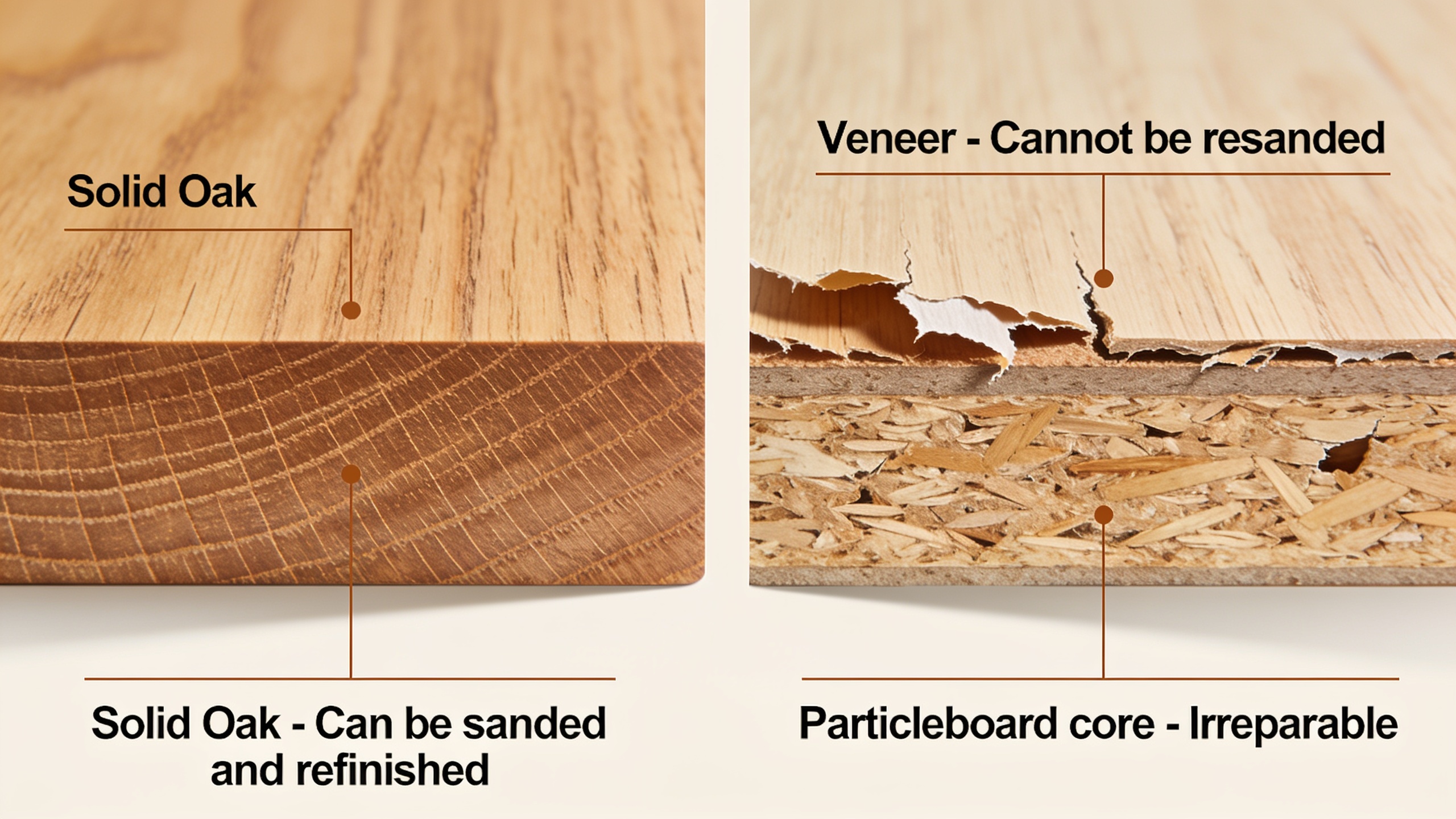
Here’s the bit that really sells it for me though. Unlike veneer or laminate (a thin decorative skin glued over particleboard), solid oak can be sanded back and refinished again and again. So a table covered in decades of nicks and watermarks doesn’t get thrown out. It gets restored, near enough to how it started. Try that with a veneered top once the surface has worn through. You can’t.
Why Oak Outlasts Other Popular Furniture Materials
Oak beats most common furniture materials on longevity, structural strength and repairability, though yes, it’ll cost you more at the till than pine, MDF or a metal-framed alternative. Here’s how it stacks up against the stuff that fills most mass-market showrooms.
| Material | Typical Lifespan | Repairable? | Resistance to Wear | Relative Upfront Cost |
|---|---|---|---|---|
| Solid oak | 50–100+ years | Yes, can be sanded and refinished | Excellent | High |
| Pine (softwood) | 10–20 years | Limited, softer wood dents easily | Fair | Low |
| MDF/particleboard with veneer | 5–15 years | Poor, veneer can’t be resanded | Poor | Low |
| Metal-framed (with fabric/laminate) | 15–25 years | Moderate, depends on joints | Good for frame, poor for upholstery | Medium |
| Engineered oak (oak veneer on plywood core) | 20–30 years | Moderate | Good | Medium |
What this really tells you is why families who shift house every five to ten years (and let’s be honest, that’s most of us, the average person in the UK moves roughly eight times in their lifetime according to housing market surveys) tend to notice that oak is the one thing that keeps turning up intact at the new place. Flat-pack and MDF gear is basically built for a single home. It was never meant to survive being taken apart, chucked in a van and rebuilt on the other side of the country.
How Does Family Oak Furniture Suit Different Generations and Styles?
Family oak furniture works across generations because its natural grain and warm tones look right in both traditional and contemporary rooms, so you’re not forced to replace it every time the design pendulum swings. A chunky oak dresser your grandparents bought in the 1980s can sit just as comfortably in a modern farmhouse kitchen today as it did in some country cottage decades back. You just change what’s around it: the wall colour, the hardware, the general vibe.
And this is honestly one of the most underrated things about oak. Nobody inheriting furniture wants to feel like they’ve been lumbered with something naff and dated. But oak’s neutral, natural look means a piece can be styled to feel current without you touching the wood itself. If you’re trying to decide which direction suits your place, it’s worth reading Rustic Oak Furniture vs Modern Oak Furniture: Which Style Suits You?, which breaks down how the exact same timber can be finished to look wildly different depending on whether you’re into big, characterful grain or something sleeker and more pared back.
The Emotional Value of Passing Down Oak Furniture
Oak furniture carries emotional weight because it lasts long enough to actually become part of a family’s story, picking up scratches, stains and repairs that mark real memories rather than just generic wear and tear. That table leg slightly scorched by a Christmas candle back in 1995. The sideboard corner worn smooth from decades of hands grabbing keys on the way out the door. That stuff becomes a quiet record of family life. Disposable furniture never gets the chance.
It’s not unlike how families hang onto other bits of their history. People used to keep scrapbooks of newspaper clippings, and now they’ll dig through digital archives like Newspapers Online to trace historical events or family milestones that made the press. A piece of inherited oak is its own kind of archive, really. A physical, touchable timeline sitting in the corner of the room instead of a folder buried in a drawer.
There’s a money angle too. Furniture you swap out every 8–10 years, which is normal for flat-pack, means you’re paying for the same thing over and over across your life. Buy one decent oak dining set or bedroom suite, though, and it can genuinely stay in daily use across two or three generations. For families who think about their home the way they think about property or savings, furniture that grows in sentimental value while barely losing any real money is a rare thing. And a genuinely sound one.
How Much Does Family Oak Furniture Cost Compared to Alternatives?
Family oak furniture usually costs 30–70% more upfront than the same sort of piece in pine, MDF or veneered board, but works out much cheaper per year of use once you factor in how long it lasts. A solid oak dining table might run you anywhere from roughly £600 to £2,000 depending on size and craftsmanship, versus £150 to £500 for a comparable MDF or pine one. But the cheap table might be for the tip inside a decade, while the oak can easily still be going strong, and still looking good, at 50 years.
Do the maths per year and it gets clearer. A £1,200 oak table used for 50 years costs about £24 a year. A £300 pine table replaced every 12 years costs around £25 a year over the same stretch, plus the faff of four separate purchases, four deliveries, and four lots of disposal. Same annual cost, minus all the hassle. When people research this stuff before buying, they lean hard on reviews, retailer content and comparison guides now.
Oh, and don’t forget resale and inheritance value. Well-kept solid oak holds its price on the secondhand and antique markets far better than flat-pack, which is basically worthless the moment it’s assembled. When families downsize or split belongings between siblings, oak tends to be the stuff everyone’s quietly fighting over. The cheap furniture just gets skipped.
Caring for Oak Furniture So It Lasts for Generations
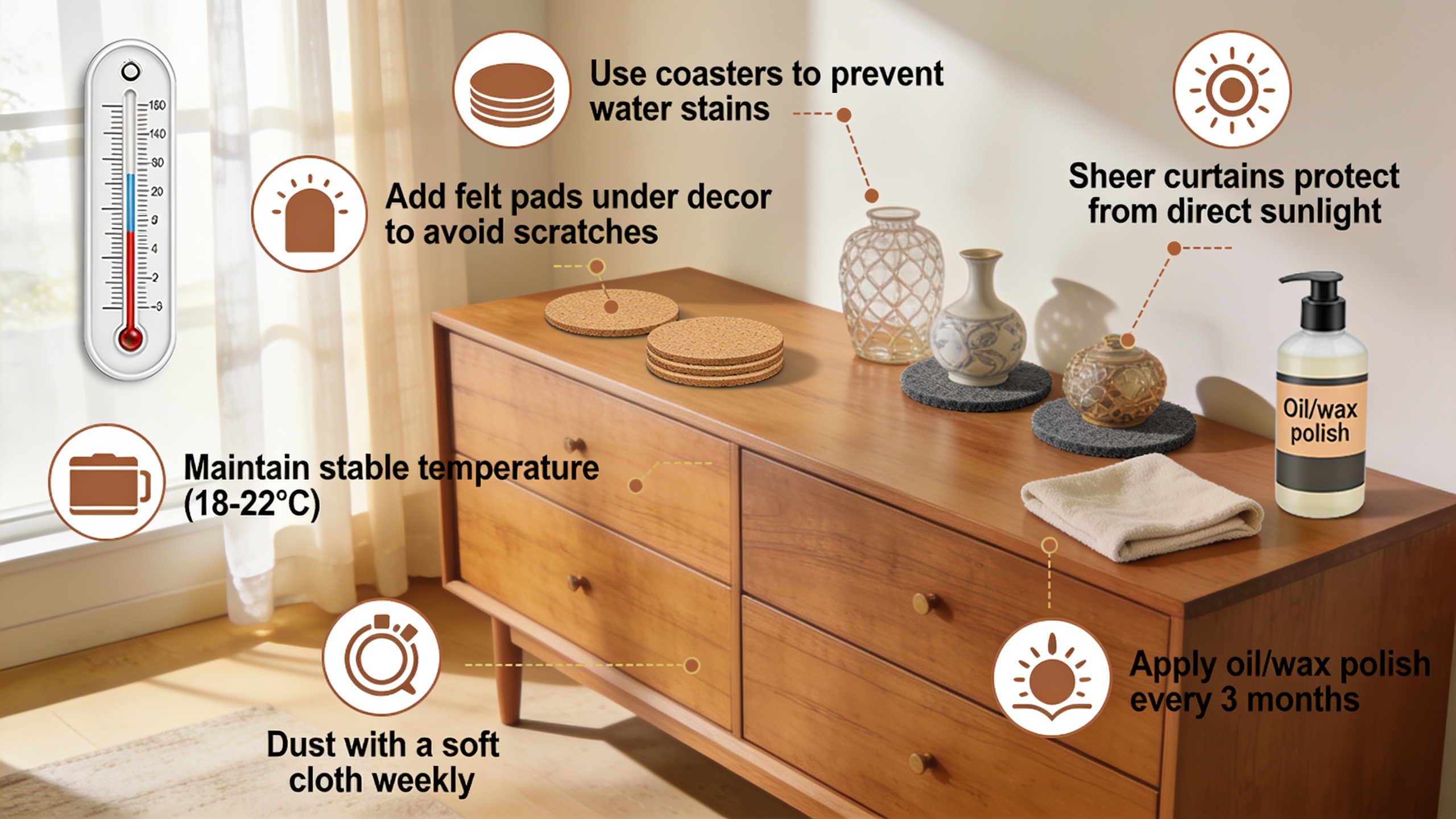
Oak needs surprisingly little upkeep to last for decades: regular dusting, the occasional polish with a suitable oil or wax, keeping it away from direct heat and sunlight, and wiping up spills before they sink into the grain. There’s no specialist cleaning products, no annual professional servicing. Unlike upholstery or laminate, it just… behaves.
But here’s the honest truth. The gap between oak that survives one generation and oak that survives four usually comes down to consistent, correct care rather than luck. If you want the full rundown on cleaning routines, which products to use, and how to tackle watermarks, scratches or fading, have a read of Oak Furniture Care: How to Keep Solid Oak Looking Good for Decades. It covers the practical stuff that keeps solid oak looking its best well past a single owner’s lifetime.
Where you put it matters as much as how you clean it.
Consistent ambient conditions make a bigger difference than most people realise. In homes with strong seasonal swings, keeping furniture in a climate-controlled or Air Conditioning room helps stabilise both temperature and humidity, which reduces the constant expansion and contraction that stresses joints over time. This is especially useful in newer, well-sealed homes where heat can build up in summer, or in rooms that get direct sun for long stretches of the day. You don’t need anything extreme, just a steady, moderate environment that avoids sharp fluctuations
Keep oak away from radiators, away from harsh sunlight through south-facing windows, and out of anywhere damp, because big swings in temperature and humidity can make the wood expand, contract or fade unevenly over time. Coasters, placemats and little felt pads under ornaments go a genuinely long way toward stopping the kind of surface damage that’s totally avoidable. Do this modest bit of ongoing care and you’ll find oak needs far less fussing than a fabric sofa, painted furniture, or anything with a veneer, all of which show damage more visibly and, worse, more permanently.
Choosing the Right Oak Pieces for a Multi-Generational Home
The best oak furniture for a multi-generational household is chosen for flexibility and heavy daily use, not just for how it looks in a showroom. Think extendable dining tables, proper robust storage, and bedroom furniture with generous, adaptable proportions. A table that stretches from six to ten seats, for instance, handles a quiet weekday breakfast and a full-house Christmas without you having to own a second piece of furniture just for the busy days.
Storage is the other big one. Solid oak sideboards, dressers and wardrobes with deep drawers and proper solid runners cope far better with years of daily opening and slamming than the lighter mass-produced stuff with plastic or particleboard mechanisms that inevitably start jamming. Bedroom furniture especially needs to be tough enough to get reassigned again and again, from the parents’ room to a kid’s room, then to the guest room, then eventually to a grown-up child’s first flat, all without falling to bits during the move.
If you’re furnishing a home meant to serve several generations, it’s also worth tracking down local specialists. An upholsterer, a French polisher, a removals firm that actually knows how to handle solid wood without dinging it. Regional directories like Bournemouth Info can be genuinely handy for that, helping people in that area find trusted local tradespeople for long-term care, restoration or transport, instead of just defaulting to a national chain that’s never handled a solid oak wardrobe in its life.
One last thing: think about how a piece will age stylistically, not just how sturdy it is. Lighter, contemporary oak finishes suit households betting on minimalism sticking around, while richer, darker tones lean into the traditional and rustic looks that rarely date. And because oak can be waxed, oiled or lightly refinished whenever your taste shifts, that first colour choice isn’t set in stone. Handy to remember if you’re expecting the furniture to outlive current interior trends entirely, which, if you’ve bought well, it probably will.
Frequently Asked Questions
Is oak furniture actually worth the extra cost, or am I just paying for the name?
For most households planning to keep their furniture long-term, yes, it’s worth it. Solid oak runs 30–70% more upfront than pine or MDF, but with a lifespan of 50 years or more, the annual cost of ownership often works out the same as, or cheaper than, replacing cheaper furniture every 10–15 years.
How do I know if something’s genuinely solid oak and not just veneer?
Check the underside, the back panel and inside the drawers. Manufacturers almost never bother finishing those hidden areas with veneer if the visible bits are solid wood. Solid oak also feels noticeably heavier than veneered board, and the grain should carry on consistently around edges and corners rather than stopping dead at a seam.
Can oak furniture be restored if it’s been handed down and looks a bit battered?
Usually, yes. Solid oak can be sanded right back to shift scratches, watermarks and old finishes, then re-oiled, waxed or varnished to bring it back to life. That’s the whole advantage over veneer, which you can’t resand without exposing the cheap board underneath.
What’s the actual difference between rustic and modern oak furniture?
Rustic oak tends to have more pronounced, characterful grain, chunkier proportions and a warmer, darker finish. Modern oak leans toward clean lines, lighter tones and simpler hardware. Same durable timber underneath, though, so it really just comes down to your taste and how it fits the room.
How much maintenance does oak actually need to last for generations?
A light dust weekly and a proper oil or wax treatment every six to twelve months is generally plenty, plus wiping spills quickly and keeping it out of direct heat and sun. It’s genuinely less demanding than looking after an upholstered sofa or something with a delicate veneer.
Choosing furniture built to last isn’t just practical. It’s a way of investing in the shared life of a household across decades rather than years. Family oak furniture, looked after properly and chosen with a bit of flexibility in mind, has a real shot at becoming part of your family’s story, rather than just another thing you replace and forget about inside ten years.