
The Modern Oak Sideboard
-
Product on sale
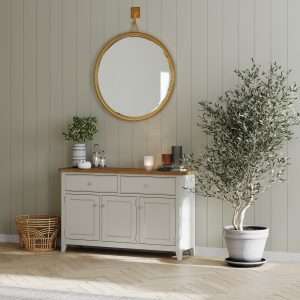 Light Grey Painted Large SideboardOriginal price was: £675.00.£450.00Current price is: £450.00.
 -
Product on sale
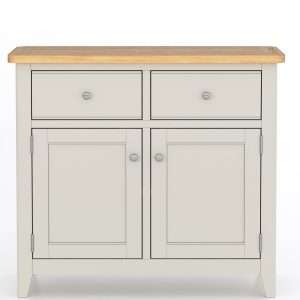 Light Grey Painted Standard SideboardOriginal price was: £457.50.£305.00Current price is: £305.00.
 -
Product on sale
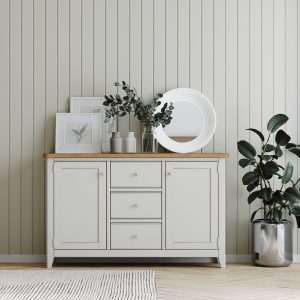 Light Grey Painted 2 Door 3 Drawer SideboardOriginal price was: £637.50.£425.00Current price is: £425.00.
 -
Product on sale
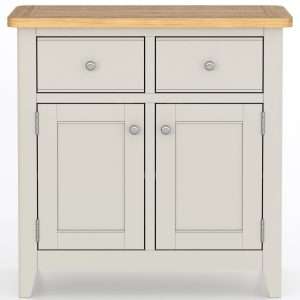 Light Grey Painted Small SideboardOriginal price was: £435.00.£290.00Current price is: £290.00.
 -
Product on sale
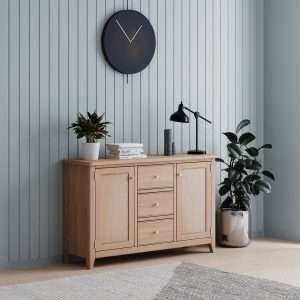 Natural Oak 2 Door 3 Drawer SideboardOriginal price was: £622.50.£415.00Current price is: £415.00.
 -
Product on sale
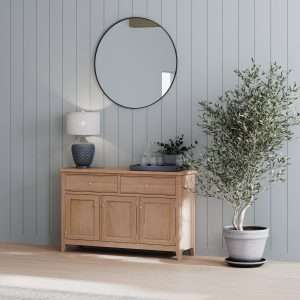 Natural Oak Large SideboardOriginal price was: £735.00.£490.00Current price is: £490.00.
 -
Product on sale
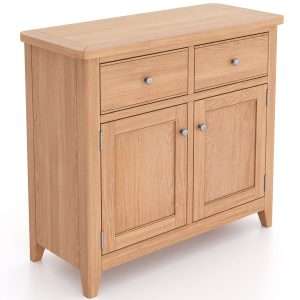 Natural Oak Standard SideboardOriginal price was: £495.00.£330.00Current price is: £330.00.
 -
Product on sale
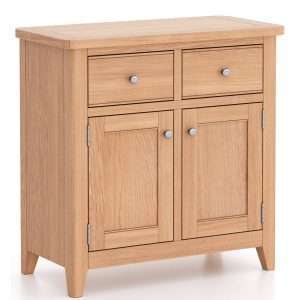 Natural Oak Small SideboardOriginal price was: £442.50.£295.00Current price is: £295.00.
 -
Product on sale
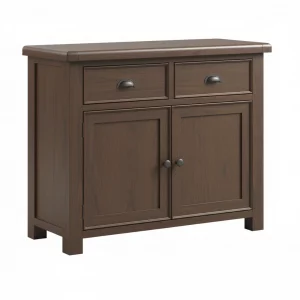 Smoked Oak Standard SideboardOriginal price was: £532.50.£355.00Current price is: £355.00.
An oak sideboard has long been one of the most useful pieces of furniture in the home. Originally associated with dining and serving, the sideboard has evolved from a display surface for tableware into a versatile storage cabinet for modern living rooms, dining rooms, hallways and open-plan spaces.
Today, an oak sideboard can hold dinnerware, glassware, table linen, books, games, paperwork and everyday household essentials. It can also provide a surface for lamps, mirrors, artwork, flowers and serving food when guests visit.
This guide looks at how the sideboard developed over time, the features associated with different furniture styles and how to choose an oak sideboard that works in a modern home.
What Is a Sideboard?
A sideboard is a low storage cabinet traditionally used in a dining room. It usually combines cupboards, drawers and a flat top surface, making it useful for storing dining essentials and serving food or drinks.
The words “sideboard,” “buffet” and “side table” have been used in different ways across periods and countries, but the core purpose has remained similar: providing an additional surface beside the dining table for dishes, drinks, tableware and decorative items.
Traditional uses include storing:
- Plates, bowls and serving dishes.
- Glassware, decanters and carafes.
- Cutlery and serving utensils.
- Tablecloths, runners and napkins.
- Candles and entertaining accessories.
- Food and drinks ready to be served.
Today, sideboards are used far more widely. They can function as living-room storage, hallway furniture, a home-office organiser, a drinks station or a display piece beneath artwork or a mirror.
Early Origins of the Sideboard
The word “sideboard” has roots in earlier dining furniture. In the Middle Ages, it could describe a board or table positioned at the side of a room, often used to hold or display valuable dining items.
Over time, serving furniture developed from simple tables and boards into more permanent forms. By the late 18th century, the sideboard had become a distinct type of dining-room furniture, typically providing a serving surface with drawers, storage pedestals or cupboards below.
Early sideboards were often designed to display fine tableware, silver, decanters and serving pieces as well as providing practical support during meals. This combination of function and display remains part of the sideboard’s appeal today.
Rather than thinking of the sideboard as a single farmhouse invention, it is more accurate to see it as furniture that evolved alongside changing dining habits, homes and ideas of entertaining.
Georgian and Regency Sideboards
During the late 18th and early 19th centuries, formal dining rooms became more important in wealthier homes. Furniture was increasingly designed as part of a coordinated room scheme, with dining tables, chairs, serving furniture and decorative elements chosen to work together.
Georgian and Regency-style sideboards were often lighter in appearance than later Victorian examples. Features could include:
- Slim, tapered legs.
- Elegant curved or serpentine fronts.
- Drawers for cutlery, napkins and serving tools.
- Side pedestals for additional storage.
- Brass rails or back fittings.
- Veneered decorative surfaces.
- Fine marquetry, inlay or detailed hardware.
These pieces were designed to be useful during formal meals, but they also reflected the social importance of dining and entertaining. The sideboard became a prominent part of the dining room, providing both storage and a place to display valued objects.
The sideboard was already established as an important dining-room form by the early 19th century, when it increasingly became part of mass-produced dining-room suites and took on a heavier, more cupboard-based form
Victorian Oak Sideboards
Victorian sideboards were often larger, heavier and more decorative than earlier designs. As storage needs increased, the lower section became more enclosed, with cupboards extending towards the floor and more space for dining-room essentials.
Typical Victorian features included:
- Substantial cupboards and drawers.
- Carved panels and decorative moulding.
- Large backboards or mirrored upper sections.
- Darker polished timber finishes.
- Ornate handles and hardware.
- Turned legs, carved details and architectural shaping.
- Storage for linen, glassware, serving dishes and dining accessories.
Oak was often used for furniture outside fashionable urban interiors, where mahogany was particularly popular. In Victorian homes, oak was valued for its visible grain, warm tone and solid appearance.
Many Victorian sideboards also included a mirrored back. This could reflect light into the dining room, make the furniture appear more imposing and provide a decorative backdrop for displayed objects.
The Victorian sideboard was not simply a storage cupboard. It was often intended to be seen, contributing to the formality and status of the dining room.
Arts and Crafts and Early Modern Design
By the late 19th and early 20th centuries, furniture design began to move away from the heavily ornamented Victorian style. Arts and Crafts makers placed greater emphasis on visible construction, honest materials and simpler forms.
Oak became particularly important within this movement because of its natural grain and strong visual character. Furniture often focused on straightforward shapes, useful joinery and craftsmanship rather than elaborate decoration.
An Arts and Crafts-inspired oak sideboard may feature:
- Clear, simple lines.
- Visible timber grain.
- Sturdy framed construction.
- Straight legs and practical proportions.
- More restrained handles and hardware.
- Less surface carving than Victorian furniture.
- Useful drawers, shelves and cupboards.
This movement helped shape the idea that wood furniture could be attractive because of the material itself, not only because of decorative carving or ornament.
At the same time, designers were experimenting with more geometric and pared-back furniture. Edward William Godwin’s 1867 sideboard, for example, is associated with the Victorian Anglo-Japanese style and shows a more angular, restrained approach than heavily carved Victorian furniture.
Mid-Century Sideboards and Modern Storage
During the 20th century, sideboards changed again. Homes became more informal, dining rooms were often smaller and furniture needed to work in more flexible ways.
Mid-century sideboards commonly used lower, longer forms, raised legs and simpler drawer-and-cupboard arrangements. They were designed to look lighter in a room and often fitted more naturally into living areas as well as dining rooms.
Modern sideboards may take inspiration from this period through:
- Low horizontal proportions.
- Tapered or raised legs.
- Simple doors and drawer fronts.
- Minimal handles.
- Light oak, natural oak or mixed finishes.
- Practical concealed storage.
- Clean-lined silhouettes.
- A wide surface for lamps, artwork and decorative objects.
A modern sideboard is often less formal than a Victorian or traditional dining-room piece. It can sit comfortably in an open-plan home, a living room, a hallway or a home office as well as beside a dining table.
Traditional and Modern Sideboards Compared
| Feature | Traditional oak sideboard | Modern oak sideboard |
|---|---|---|
| Overall appearance | More decorative, substantial and formal | Cleaner, simpler and often lighter in appearance |
| Legs and base | Turned legs, enclosed plinths or carved details | Raised legs, slim frames or simple plinth bases |
| Storage | Deep cupboards, drawers and sometimes a large backboard | Cupboards and drawers designed for flexible everyday storage |
| Finish | Darker oak, rich stain or traditional polish | Light oak, natural oak, smoked oak or painted-and-oak finishes |
| Hardware | Decorative metal handles, knobs and ornate detailing | Minimal handles, recessed pulls or simple bar handles |
| Best suited to | Traditional dining rooms, period homes and classic interiors | Modern homes, open-plan spaces, living rooms and compact dining areas |
| Styling approach | Symmetrical lamps, formal mirrors and classic accessories | Artwork, plants, simple lighting and edited decorative displays |
Both styles can be useful and attractive. The right choice depends on the scale of your room, the amount of storage required and whether you want the furniture to blend in quietly or become a visual focal point.
How Oak Sideboards Work in Modern Homes
Although the sideboard began as dining-room furniture, it now has a role in almost every part of the home.
Dining Room Storage
In a dining room, an oak sideboard can store:
- Dinnerware and serving pieces.
- Glassware and a carafe.
- Table linen and placemats.
- Candles and dinner-party accessories.
- Cutlery and serving utensils.
- Seasonal table decorations.
The top can be used as a serving station for drinks, dessert, coffee or buffet-style meals.
For practical dining-room storage, browse our full range of oak sideboards.
Living Room Furniture
In a living room, a sideboard can replace open shelving or several smaller storage pieces. Use it to hide cables, remote controls, board games, books, media accessories, blankets and household paperwork.
Style the top with a lamp, artwork, a vase or a tray for everyday items.
Hallway Storage
A sideboard can make a larger hallway more useful and welcoming. Use drawers for keys, post, chargers and smaller essentials, then use cupboards for reusable bags, umbrellas, scarves or dog-walking accessories.
Place a mirror above the furniture and use a tray on top to create a simple landing zone for things you use every day.
Home Office Organisation
A sideboard can provide discreet home-office storage for files, stationery, printer paper, notebooks, chargers and technology accessories. It can be particularly useful when your workspace is part of a dining room or open-plan living area and needs to be cleared away at the end of the day.
Choosing an Oak Sideboard Today
When choosing an oak sideboard, think about function before style. The most attractive piece will still feel frustrating if it is too large for the room, does not have enough drawers or provides the wrong type of storage.
Consider:
- The width of your available wall.
- The depth of the room and nearby walkways.
- Clearance needed for cupboard doors and drawers.
- The amount of storage you need.
- Whether you need drawers, cupboards, shelves or a combination.
- The height of windowsills, radiators and artwork.
- The finish that suits your home.
- Whether the sideboard will be used for dining, living-room, hallway or office storage.
Choose a Small Sideboard for Compact Rooms
In a narrow dining room, small living room, hallway or apartment, a compact design may be more practical than a wide cabinet. A smaller sideboard can still provide cupboards and drawers for essentials while preserving floor space.
Explore our range of small oak sideboards for storage suited to smaller rooms.
Choose a Large Sideboard for More Storage
A wider sideboard can work well in a larger dining room, open-plan space or living room with a long clear wall. It can become a strong furniture feature while providing room for tableware, entertaining supplies, games, books and household essentials.
Browse our collection of large oak sideboards for wider storage options.
Choose Light Oak for a Brighter Look
Light oak is a versatile choice for smaller rooms and modern interiors. It adds natural warmth without the visual heaviness of darker furniture.
Pair light oak with cream, white, pale grey, sage green, muted blue or terracotta for a relaxed, contemporary look. Explore our collection of light oak sideboards for lighter wood finishes.
Choose White and Oak for Contrast
White-and-oak sideboards can work well in modern country, Scandinavian-inspired and brighter dining spaces. The painted finish can help the furniture feel lighter, while oak tops or details add natural warmth.
Browse our white sideboards for painted and two-tone styles.
Style an Oak Sideboard for Your Home
The top of a sideboard gives you useful display space, but it should not become a permanent collection point for post, cables and loose household items.
A simple styling approach is:
- Add one taller focal point, such as a mirror, artwork, lamp, large vase or houseplant.
- Add one medium-height item, such as books, a smaller vase or candleholders.
- Use a tray to gather smaller items, including coasters, candles, remote controls or keys.
- Leave clear space so the oak finish remains visible and the sideboard can still be used for serving.
For a traditional look, use a mirror, matching table lamps and classic ceramics. For a modern look, choose one lamp, a large framed print, a vase with greenery and a small tray.
The most effective sideboard styling feels personal and useful rather than overly staged.
Find an Oak Sideboard for Your Home
From its early role as dining and serving furniture to its place in today’s living rooms, hallways and open-plan homes, the sideboard has remained popular because it is both practical and adaptable.
An oak sideboard adds useful storage, a warm natural material and a surface that can be styled for everyday life or special occasions.
Explore our complete range of oak sideboards to find a design that suits your dining room, living room, hallway or home office.