
Solid oak or oak veneer? Choose solid oak if you want the greatest scope to repair and refinish a surface later. Choose quality oak veneer if you want a real-oak surface on a wide, stable panel, often at a lower price. For many sideboards, wardrobes and TV units, a well-made combination of both can be the most practical choice.
The words “oak furniture” do not tell you how every part is made. Before buying, check which components are solid oak, what supports any veneer and whether the construction suits how you will use the piece.
Which Should You Choose?
- Choose solid oak when future sanding, repair or refinishing is a priority.
- Choose quality oak veneer when you want a real-oak surface on a broad top, door or side panel and care most about stability, weight or price.
- Consider mixed construction when you want solid oak in parts such as frames, legs or edges and stable panels in wider areas.
These are starting points, not guarantees. A well-made piece with appropriate materials and sound joints is a better purchase than a poorly made piece marketed with an impressive-sounding material label.
Solid Oak vs Oak Veneer at a Glance
| What to compare | Solid oak | Oak veneer |
|---|---|---|
| Construction | Oak timber throughout the component | A thin layer of real oak bonded to a supporting core |
| Repairability | Often allows deeper sanding and refinishing | Repair options depend on the veneer and finish; sanding depth is limited |
| Wide panels | Needs a design that allows for natural wood movement | A suitable core can help a broad panel remain stable |
| Weight | Usually heavier | Often lighter |
| Price | Usually higher | Often lower |
The buying rule: Check the materials used in the parts that matter to you. An oak dining-table top, a sideboard door and a TV-unit shelf do different jobs, so the best construction may differ between them.
What Is Solid Oak Furniture?
A solid oak component is made from oak timber through its full thickness. Furniture makers may use solid oak for legs, frames, rails, drawer fronts, doors, edges or tops. Because the oak continues beneath the surface, a worn or scratched component can often be repaired or refinished.
Solid oak is a natural material that expands and contracts as humidity changes. Good furniture design allows for that movement, particularly in wide tops and panels. A piece described as “solid oak furniture” may also contain other materials in components such as backs or drawer bases, so read its full specification.
What Is Oak Veneer Furniture?
Oak veneer is a thin sheet of real oak bonded to a supporting core, which may be plywood, MDF or another engineered material. The visible surface is genuine oak. Veneer is therefore different from laminate or a printed wood-effect finish.
Using a suitable core can help a broad top, door or side panel stay flat as conditions change. Veneer can also reduce the weight and cost of a piece. Its quality depends on the core, bonding, edge treatment and finish—not simply on the presence of real oak at the surface.
Because the oak layer is thin, veneer generally offers less scope for deep sanding than solid oak. Ask about the recommended repair method before buying if long-term refinishing matters to you.

Is Oak Veneer Fake or Lower Quality?
Genuine oak veneer is not fake wood: its surface is real oak. Nor does veneer automatically indicate poor quality. What matters is whether the supporting core, edges, joints and finish are suitable for the furniture’s intended use.
Likewise, “solid oak” does not automatically mean a piece is well made. Compare the whole construction rather than treating either term as a quality guarantee. If a listing says only “oak effect”, ask whether it contains real oak before assuming that it does.
How to Check What You Are Buying
Start with the product specification. Photographs show the design, but they may not reveal what lies beneath a finished surface. If the listing does not break down the materials by component, ask the retailer:
- Which parts are solid oak? Ask about the top, frame, legs, doors and drawer fronts separately.
- Which parts are veneered? Check the top, sides, shelves and broad door panels.
- What supports the veneer? “Oak veneer” describes the surface, not the core beneath it.
- How can the surface be repaired? Check the manufacturer’s advice for scratches, damage and worn finishes.
- What does the warranty cover? Read the terms rather than assuming all parts have the same cover.
If you can inspect the piece in person, look at the underside of its top and the edges of its doors and shelves. An edge strip may suggest a veneered panel, but appearance alone is not conclusive; confirm the construction in writing.

Which Is More Durable?
Neither material wins in every situation. Solid oak has more material available if a surface needs substantial repair. A well-made veneered panel can be a sensible choice where a wide surface needs to remain stable. The finish, joints, frame, drawers and fittings also affect how long the complete piece performs well.
Do not assume either material is resistant to heat, standing water or scratches. If the furniture will face heavy daily use, check its care instructions and ask what can be repaired or replaced.
Is Solid Oak Worth the Higher Price?
Solid oak usually costs more because it uses more oak timber and may require more work to make. That extra cost may be worthwhile for a surface you expect to keep, repair and refinish over many years.
Oak veneer can provide a real-oak surface at a lower price and weight. For a large cabinet, a well-made mixed construction may offer better value than choosing an entirely solid design simply for its label. Compare the specifications of actual products before deciding.


What Matters for Each Furniture Type?
| Furniture | Check first | Why it matters |
|---|---|---|
| Dining table | Top material, finish and repair guidance | The top faces frequent use, spills and cleaning. |
| Sideboard | Frame, drawers and stability of broad panels | Doors and drawers need to stay aligned. |
| TV unit | Load capacity, shelf support and ventilation | The unit must suit your television and equipment. |
| Wardrobe | Door construction, fittings and overall weight | Large doors need to open and close reliably. |
| Chest of drawers | Frame, drawer boxes and runners | These affect everyday use as much as the exterior. |
Choosing an Oak Sideboard
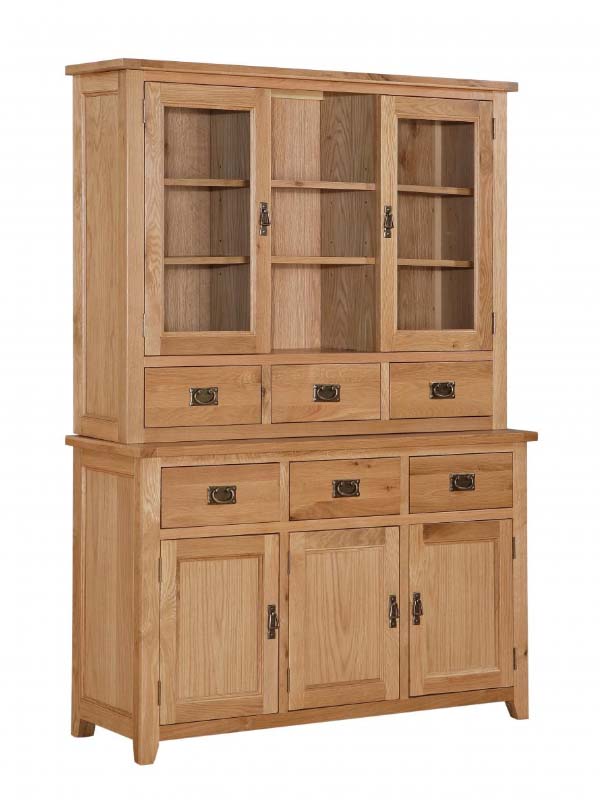
A sideboard needs a sturdy structure for its contents, reliable drawers and doors that stay aligned. Its broad top and sides also need to remain stable. Ask what is used for the frame, doors, drawer fronts, top and sides rather than relying on a general “oak” description.
Ready to compare designs? Shop oak sideboards and check the materials on each product listing. If space is limited, browse small oak sideboards.
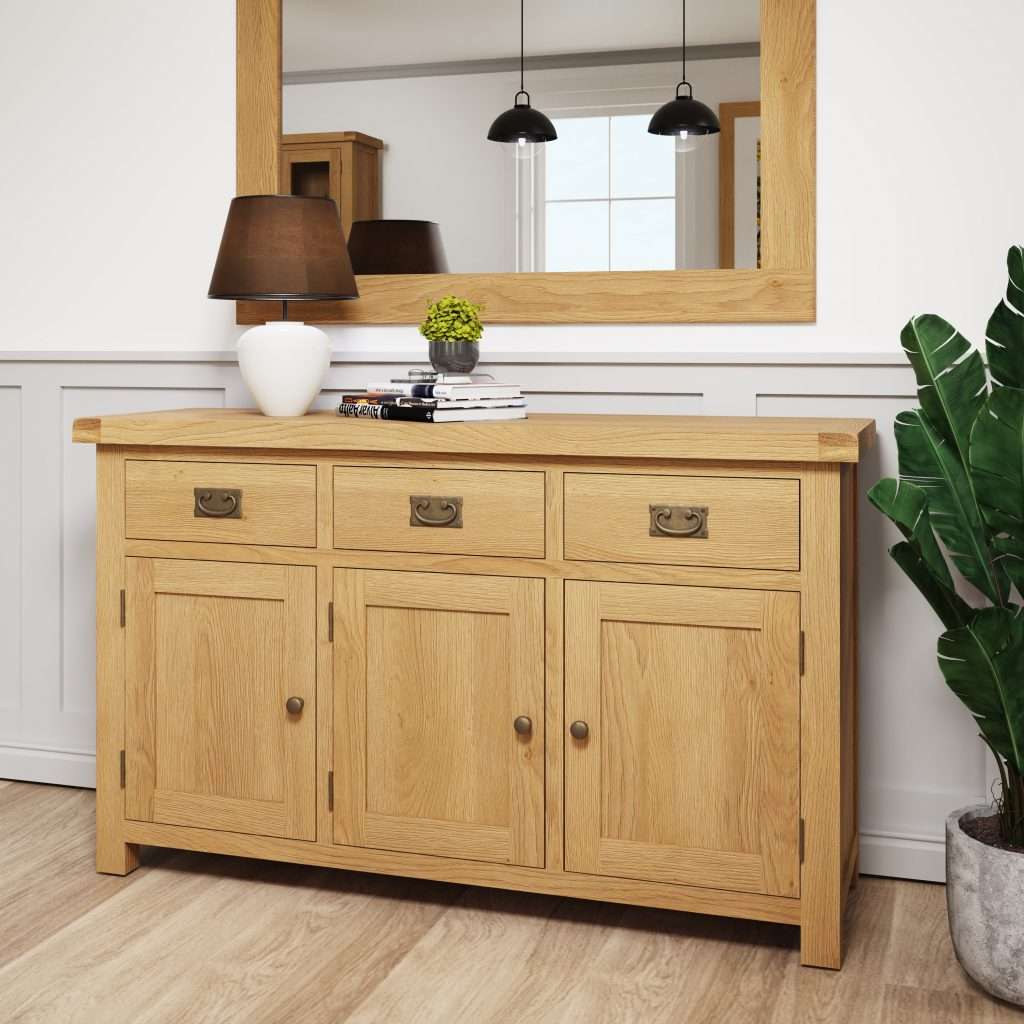
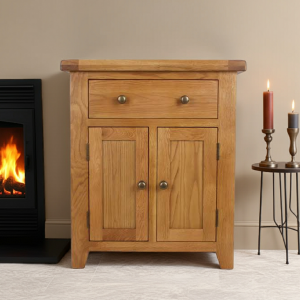
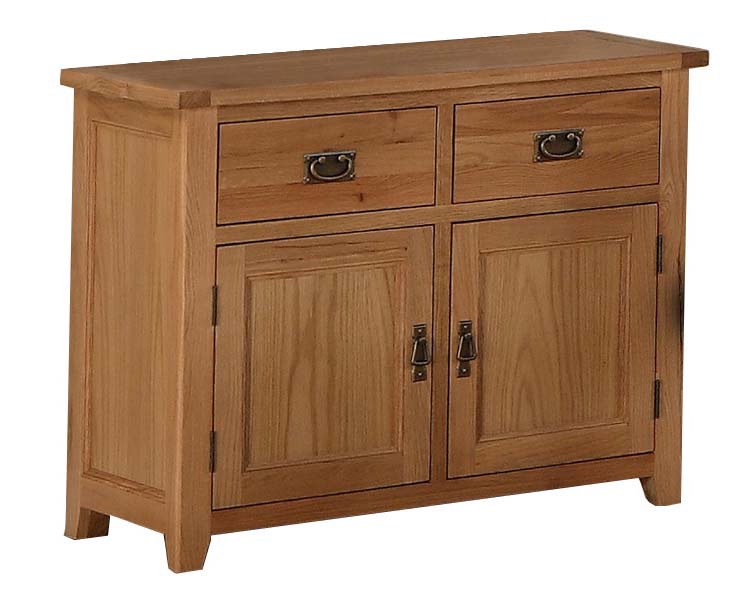
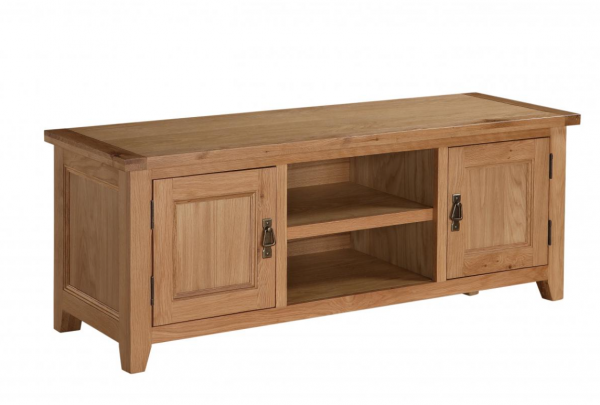
The following images show furniture from different views. They show appearance, not proof of which components are solid or veneered; check the individual product specification for that.


Choosing an Oak TV Unit
For an oak TV unit, confirm the stated load capacity, usable top width, shelf dimensions, cable access and ventilation. A unit that fits and supports your equipment matters more than whether every panel is solid oak.
Solid oak may be used in load-bearing frames and legs, while veneered panels may suit broad tops and sides. Shop wooden and oak TV units, then check the measurements and construction of any model you like.
Choosing Dining and Bedroom Furniture
A dining-table top faces regular contact with plates, cutlery, spills and cleaning. If you want the option to refinish it later, check what the top is made from and whether the manufacturer recommends sanding. Solid oak generally offers more scope for this than a thin veneered surface, but the finish and construction still matter. Browse oak and wooden dining tables to compare designs.
For wardrobes and chests of drawers, focus on door alignment, drawer construction, fittings and panel stability. Mixed materials can be a practical choice when the piece is well made and the specification is clear. Explore bedroom furniture, then check the materials of each product that interests you.
More Oak Furniture Examples
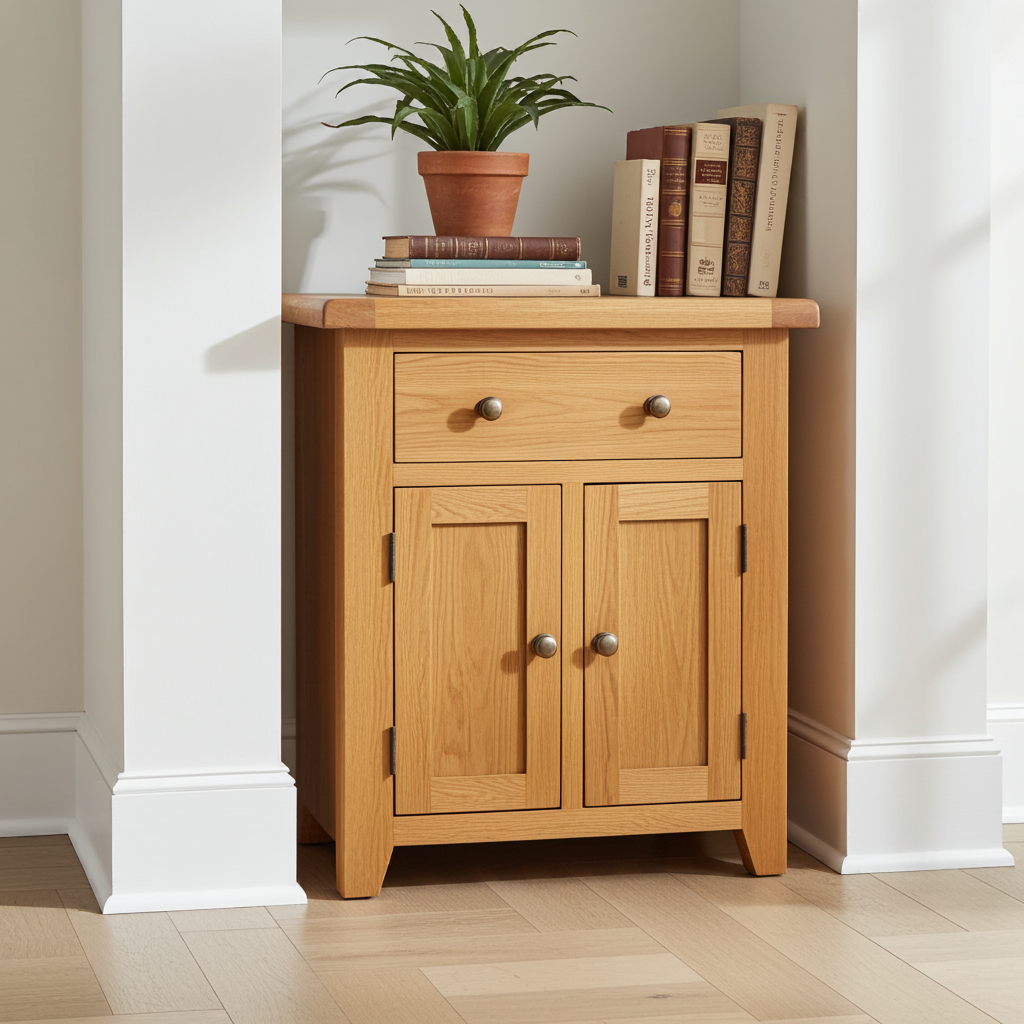
These images provide further examples of oak furniture designs. An image alone cannot confirm whether a particular component is solid oak or veneered.
How to Care for Both Materials
Follow the care instructions for the furniture’s finish. Dust with a soft cloth, clean spills promptly and avoid leaving moisture on the surface. Coasters and placemats can help protect both solid oak and oak veneer from heat and marks.
Take particular care with repairs. Solid oak generally has more material available if sanding is appropriate. Veneer has a limited oak layer, so ask for the recommended repair method before attempting to sand it.
Your Final Buying Checklist
- Identify which components are solid oak.
- Identify which components are veneered and what supports the veneer.
- Check the frame, joints, drawers and fittings.
- Confirm the finish and recommended care.
- Ask how exposed surfaces can be repaired.
- Check the product’s dimensions and any stated load limits.
- Read the individual product’s delivery, returns and warranty information before ordering.
The bottom line: Solid oak is a strong option when future repair and refinishing are priorities. Quality oak veneer can be a sensible choice for wide panels, weight and price. The better purchase is the piece whose materials, construction and finish match the job you need it to do.