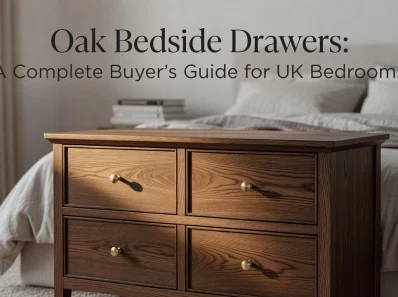
Choose oak bedroom furniture by comparing its colour, shape, handles and proportions with the room you already have. A shared oak label is not enough to establish a match. Decide whether you want a coordinated collection or a deliberate mix, then check the individual pieces before ordering.
Browse our bedroom furniture range with that plan in mind. The pieces in a room photograph may be separately sold: confirm collection names, item quantities and finishes rather than assuming one complete bedroom package.
Start with the furniture you are keeping
Use an existing bed, wardrobe or chest as your starting point. Note its light or dark appearance, warm or grey-toned colour, leg shape and handle finish. Include the flooring and doors in your comparison so new furniture relates to the whole room, not just another catalogue photograph.
For a coordinated look, shortlist pieces from the same named range and verify their specifications. For a mixed look, choose a detail to repeat, such as a similar handle finish, straight-lined shape or related wood tone. You do not need every piece to be identical to create a room that feels considered.
Compare the details behind style labels
- For a clean-lined look, compare simple drawer fronts, restrained handles and uncluttered silhouettes.
- For a more traditional look, compare framed fronts, shaped edges and decorative details.
- For a rustic look, look for the texture and character shown and described for the exact product. A rustic label does not prove that furniture is handmade or reclaimed.
Treat these as styling options, not quality grades. A modern, traditional or rustic description does not tell you the materials, storage capacity, durability or price of a particular piece.
Separate wood colour from the protective finish
Compare how light or dark the furniture appears and whether its colour leans warm or grey. If you mix tones, a useful approach is to choose one as the main tone and repeat a supporting colour through bedding, a rug or smaller accessories. Deliberate contrast can be easier to plan than expecting two different collections to match exactly.
Colour descriptions such as light oak or smoked oak are not complete construction or coating specifications. Ask which components are solid wood, veneered or made from other materials, and whether the surface is lacquered, oiled, waxed or painted. Follow the care instructions for the exact finish supplied.
Screen settings and photography lighting can affect your colour comparison. Ask for additional photographs or an available sample before relying on a close match. Even when pieces share a range name, clarify any colour variation that matters to you.
Check scale as well as appearance
Compare the visual weight of the furniture: a tall wardrobe or broad chest may dominate beside a smaller bed or narrow bedside table. Mark actual footprints on the floor and allow room for doors, drawers and everyday movement. Use dimensions rather than a room photograph to judge fit.
Compare bedside height with the top of your dressed mattress so the surface is easy to reach. Confirm the storage you need before choosing a piece solely for its appearance; outside measurements do not establish usable drawer or hanging space.
Existing product photographs to compare
These images link to individually listed furniture, not a verified matching bedroom bundle. Use them to compare the shapes and details you like, then open each product page for current specifications, price and availability. Do not infer matching materials or finishes from the image group.


Before committing to your shortlist
- Confirm the exact products, quantities, collection names and finishes in your order.
- Check component materials, internal storage dimensions and any assembly requirements that are unclear.
- Measure the delivery route and review current delivery and returns terms for each piece.
Return to the bedroom collection to choose furniture that fits both your style and your room. Keep the visual plan simple, and ask about any missing specification before ordering.