
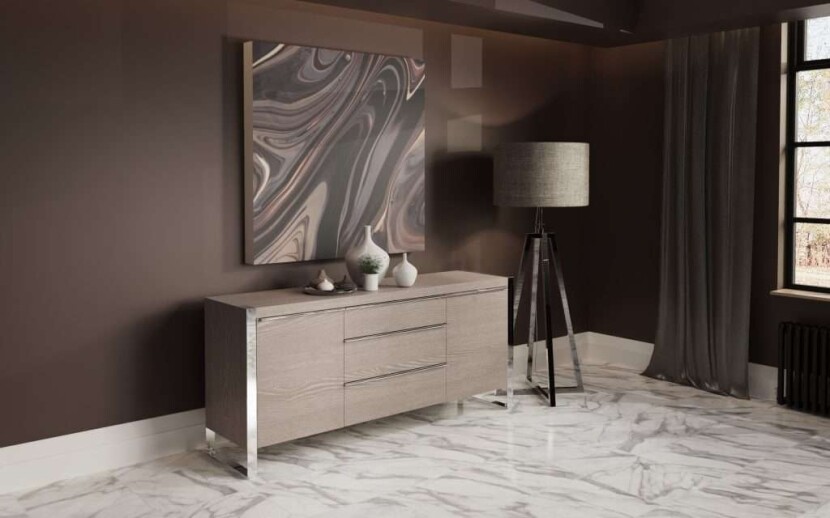
An oak sideboard brings natural warmth, visible grain and useful storage to a room. By pairing it with metal, glass, ceramics, woven materials and soft textiles, you can create a more layered, personal look without losing the timeless appeal of the wood.
The key is balance. Oak already has texture and character, so you do not need to add every possible material at once. Choose two or three complementary finishes, repeat them in small details around the room and leave enough open space for the sideboard itself to remain a feature.
Whether your style is modern, industrial, rustic, Scandinavian-inspired or traditional, these ideas will help you pair an oak sideboard with other materials in a way that feels intentional and practical.
Start With the Oak Finish
Before choosing accessories, look carefully at the colour and grain of your sideboard. Light oak, natural oak, smoked oak and painted-and-oak furniture all work differently with metal, glass and textiles.
A light oak sideboard often suits pale ceramics, clear glass, black metal and soft neutral fabrics. A darker oak or smoked oak design can handle stronger contrast, such as brass, antique gold, dark green glass or black-framed artwork.
Think about the existing finishes in your room:
- Door handles and light fittings.
- Picture frames and mirrors.
- Dining-chair legs.
- Curtain poles.
- Coffee-table legs.
- Lamps and lampshades.
- Shelving brackets.
- Kitchen handles in an open-plan space.
- Flooring and wall colours.
You do not need to match every metal finish exactly. However, repeating one or two elements—such as black lamp bases and black picture frames—can make the overall room feel more connected.
For a wide choice of finishes, sizes and storage layouts, explore our collection of oak sideboards.
Pair Oak With Black Metal
Black metal is one of the easiest materials to pair with oak. It adds definition and contrast, particularly in modern, industrial or contemporary interiors.
Use black metal through:
- Picture frames.
- Table-lamp bases.
- Candleholders.
- Mirrors with slim black frames.
- Tray handles.
- Plant stands.
- Decorative bowls.
- Wall lights.
- Dining-chair legs.
- Shelving brackets.
A light oak sideboard with a black-framed mirror above it can create a clean, modern focal point. Add one black lamp, a ceramic vase and a small tray to keep the look simple.
In a dining room, black metal candleholders and a framed print can bring contrast without making the room feel too dark. In a living room, repeat the black through a floor lamp, TV unit hardware or coffee-table legs.
Avoid using too much black in a small or dark room. Use it as an accent, then balance it with pale walls, warm lighting, greenery and lighter decorative objects.
Add Brass, Antique Gold or Warm Metal
Brass, antique gold and warmer metal finishes complement oak because both materials have warm undertones. They can make a dining room, living room or hallway feel more layered and elegant.
Try introducing warmer metals through:
- Table-lamp bases.
- Candleholders.
- Picture frames.
- Decorative trays.
- Small bowls.
- Vase details.
- Mirror frames.
- Cabinet hardware.
- Wall lights.
- Bar accessories.
Brass tends to work particularly well with natural oak, medium oak and smoked oak. Pair it with cream ceramics, dark green foliage, deep blue accessories or warm neutral textiles for a sophisticated look.
Keep the finish consistent where possible. For example, if you choose antique-brass candleholders, a brass-framed mirror or brass lamp base can help tie the arrangement together.
You do not need large metallic objects. A few smaller accents can be enough to add contrast and warmth.
Use Glass to Make the Display Feel Lighter
Glass can soften the visual weight of an oak sideboard, especially in smaller rooms or spaces with limited natural light. Clear glass reflects light without adding too much colour or visual bulk.
Use glass accessories such as:
- Clear vases.
- Smoked-glass candleholders.
- Coloured glass bottles.
- A glass bowl.
- A glass tray.
- A decanter and glassware.
- A glass lamp base.
- Framed prints with a slim glass front.
- Glass-fronted decorative storage.
Clear glass works well in bright, modern spaces. Smoked or coloured glass adds a more dramatic look and can suit darker oak, brass accents or deeper wall colours.
In a dining room, a glass vase with fresh flowers or branches can be enough to create height and softness. In a living room, a smoked-glass bowl or tray can add subtle texture beside books, a lamp and a plant.
Always use a coaster, tray or felt pad beneath glass vases and decorative objects. Condensation and trapped moisture can mark timber surfaces if left in contact with the wood.
Add Ceramics and Stoneware for Soft Texture
Ceramics and stoneware are an easy way to add texture without making a sideboard display feel busy. Their softer, matte finishes contrast well with the natural grain of oak and the shine of metal or glass.
Try using:
- Ceramic vases.
- Stoneware bowls.
- Hand-thrown planters.
- Decorative candleholders.
- Small lidded pots.
- Sculptural ornaments.
- Serving bowls.
- Ceramic table lamps.
- A bowl for keys or jewellery.
Choose colours that complement the room rather than introducing too many competing shades. Cream, off-white, stone, warm grey and muted green work especially well with light or natural oak.
For a stronger contrast, use deep blue, forest green, terracotta or charcoal ceramics. Repeat the colour in a cushion, artwork, rug or dining-chair fabric to make the arrangement feel deliberate.
Bring in Woven and Natural Materials
Woven baskets, linen, rattan and natural fibres work beautifully with oak because they create a relaxed, tactile look. They are also practical for hiding everyday clutter inside cupboards, on lower shelves or beside the sideboard.
Use natural materials for:
- Storage baskets.
- Linen table runners.
- Woven trays.
- A jute or wool rug nearby.
- Fabric-covered books.
- A storage box for cables or paperwork.
- A basket for throws.
- A rattan lamp shade.
- A woven planter cover.
- Natural-fibre coasters.
In a dining room, a linen runner and a woven basket inside the sideboard can provide practical texture without overcrowding the top.
In a living room, use a basket beneath or beside the sideboard for throws, magazines or children’s toys. Keep the top surface more minimal, using a lamp, vase and small tray.
Natural materials work particularly well in rustic, Scandinavian, modern-country and relaxed neutral interiors.
Add Leather and Soft Textiles
Leather and fabric help balance the hard surfaces of oak, glass and metal. A small leather detail can make the display feel more lived-in and personal, while soft textiles add warmth to the wider room.
Use leather through:
- A small tray.
- Book covers.
- Decorative storage boxes.
- Dining chairs.
- A bench cushion.
- A framed leather-bound book.
- Handles on nearby furniture.
Use textiles through:
- A linen table runner.
- Soft curtains.
- Cushions and throws.
- Upholstered dining chairs.
- A fabric lampshade.
- A wool or jute rug.
- A folded throw in a basket.
You do not need to place fabric directly on the sideboard if it is likely to gather dust or interfere with serving. Instead, use textiles in the surrounding room to soften the overall scheme.
For example, pair an oak sideboard with a linen-shade lamp, a woven basket, a soft rug and leather dining chairs. This creates a layered look without filling the top surface with too many objects.
Create a Focal Point Above the Sideboard
Mixing materials works best when the sideboard display has a clear focal point. A mirror, framed print or statement artwork above the furniture can anchor the arrangement and connect the sideboard to the rest of the room.
Black-Framed Mirror
A slim black-framed mirror brings contrast and works especially well with light oak. Repeat the black in a lamp base, candleholder or picture frame.
Brass-Framed Artwork
A brass or antique-gold frame adds warmth and works well with natural oak, darker oak and deep-coloured walls. Pair it with a brass lamp or candleholder for a coordinated look.
Large Canvas or Print
Artwork can bring colour and texture without adding objects to the sideboard top. Choose a print that picks up colours already in the room, such as green foliage, terracotta cushions, blue dining chairs or warm neutral walls.
Vintage Wood Frame
A vintage-style wood frame can create a more traditional or rustic feel. It works well with stoneware, linen and greenery.
Choose one large focal point or a coordinated pair of prints. Too many small frames can make the display look cluttered unless you are creating a deliberate gallery wall.
Use a Simple Styling Formula
A sideboard display does not need a large number of accessories. Try this simple arrangement:
- Add one tall item, such as a mirror, artwork, tall lamp, vase or houseplant.
- Add one medium-height item, such as a ceramic vase, framed photograph or stack of books.
- Add one lower item, such as a tray, bowl, candleholder or decorative box.
- Repeat one material elsewhere, such as black metal, brass, glass or linen.
- Leave clear space so the oak surface remains visible and useful.
For example, a light oak sideboard could be styled with:
- A large black-framed print.
- A black metal table lamp at one end.
- A cream ceramic vase with eucalyptus.
- A smoked-glass candleholder.
- A wooden tray holding coasters and remote controls.
The combination of oak, black metal, ceramic and glass creates variation without looking overly busy.
Choose Material Combinations by Style
| Interior style | Oak sideboard pairing ideas |
|---|---|
| Scandinavian | Light oak, white ceramics, clear glass, linen, pale grey and black accents |
| Modern | Oak, black metal, smoked glass, simple artwork and a minimal lamp |
| Industrial | Oak, black steel, dark leather, concrete-effect accessories and exposed-bulb lighting |
| Modern country | Natural oak, painted furniture, stoneware, linen, woven baskets and greenery |
| Rustic | Oak, aged brass, handmade ceramics, wool throws, vintage books and dried flowers |
| Mid-century inspired | Oak, tapered-leg furniture, coloured glass, brass, abstract art and warm-toned ceramics |
| Coastal | Light oak, white paint, clear glass, woven textures, soft blue and sandy neutral tones |
| Traditional | Medium or darker oak, brass, framed artwork, classic ceramics and symmetrical lighting |
You do not need to follow one style perfectly. Mixing a few elements from different styles can create a home that feels more personal, as long as you repeat colours and materials enough for the room to feel connected.
Use Materials for Practical Storage
Mixing materials is not only about decoration. It can help you organise your home more effectively.
| Material | Practical use inside or around the sideboard |
|---|---|
| Woven baskets | Table linen, board games, toys, craft supplies and throws |
| Fabric boxes | Cables, chargers, paperwork and small accessories |
| Glass jars | Matches, small craft items, decorative pebbles or dried flowers |
| Metal trays | Coasters, drinks accessories, candles and hallway essentials |
| Ceramic bowls | Keys, jewellery, loose change and small everyday items |
| Wooden boxes | Remote controls, batteries, chargers and small electronics |
| Leather trays | Watches, wallets, glasses and bedside or hallway accessories |
Use containers to create zones inside cupboards and drawers. This stops a sideboard from becoming a place where unrelated items are piled together.
A tray on top is particularly useful because it groups smaller objects, protects the surface and can be moved quickly when you need the sideboard for serving food or drinks.
Protect Your Oak Sideboard
Different materials can mark, scratch or trap moisture against wood if they are placed directly on the surface for long periods. Protect the oak as you style it.
- Use felt pads beneath metal, ceramic and glass objects.
- Place water-filled vases and plant pots on a waterproof coaster or tray.
- Use coasters beneath drinks and bottles.
- Use heat-resistant mats for hot dishes.
- Wipe spills promptly with a soft cloth.
- Avoid harsh cleaning sprays and abrasive cloths.
- Keep electrical cables away from water-filled vases and drinks.
- Route lamp cables safely behind the furniture.
- Avoid placing sharp-edged metal objects directly onto the wood.
- Follow the furniture-care guidance for your specific finish.
A few simple precautions allow you to use the sideboard every day while protecting its surface.
Find an Oak Sideboard for Your Style
Mixing oak with metal, glass, ceramics, woven textures and soft textiles is an easy way to make a sideboard feel more personal. Choose a small number of materials, repeat them around the room and leave enough space for the furniture to remain practical.
Whether you want a modern black-and-oak look, a relaxed rustic display or a brighter light-oak scheme, the right sideboard can provide a warm, versatile foundation for your home.
Explore our collection of oak sideboards to find practical storage furniture for your dining room, living room, hallway or open-plan space.