
A 70cm-wide sideboard is inherently versatile: small enough for compact UK rooms, but still substantial enough to provide real storage and display space. The key is matching its design to your interior style so it feels integrated, not tacked on.
This guide breaks down the main interior design styles and shows how a compact 70cm sideboard can work in each, with specific features to look for and styling ideas.
Browse by size: See all our 70cm-wide sideboards and filter by finish and design to match your style.
Why 70cm Works Across Different Styles
At 70cm wide, a sideboard can act as:
- A compact credenza in a living room.
- A small buffet in a dining area.
- A slim console in a hallway or entry.
Because it doesn’t dominate the wall, it can slot into a wide range of styles as long as the materials, colours and details align with the rest of the room.
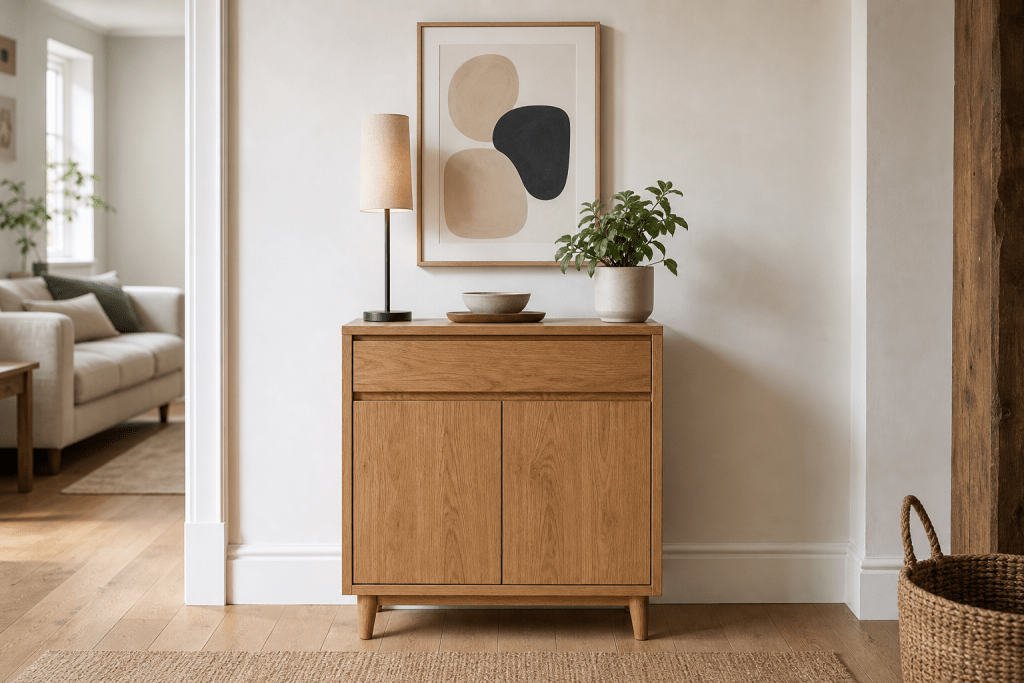
1. Modern / Minimalist
Key features:
- Clean lines, simple forms.
- Light or mid-tone oak, painted finishes (white, grey, black).
- Minimal or hidden hardware.
How a 70cm sideboard fits:
In a modern interior, a 70cm sideboard works as a low-profile storage unit that doesn’t visually clutter the space.
- Choose a design with flat fronts and subtle or no handles.
- Keep the top relatively clear: one lamp, one sculptural object, maybe a single framed print above.
- Use it to hide away media equipment, games or dining extras so surfaces stay calm.
Styling tips:
- Stick to a restrained colour palette (e.g. oak + white + black accents).
- Use geometric or abstract art above the sideboard.
- Add a sleek table lamp with a metal or ceramic base.
If you’re aiming for a minimalist look, our 70cm-wide sideboards with simple door fronts and clean profiles are a good match.
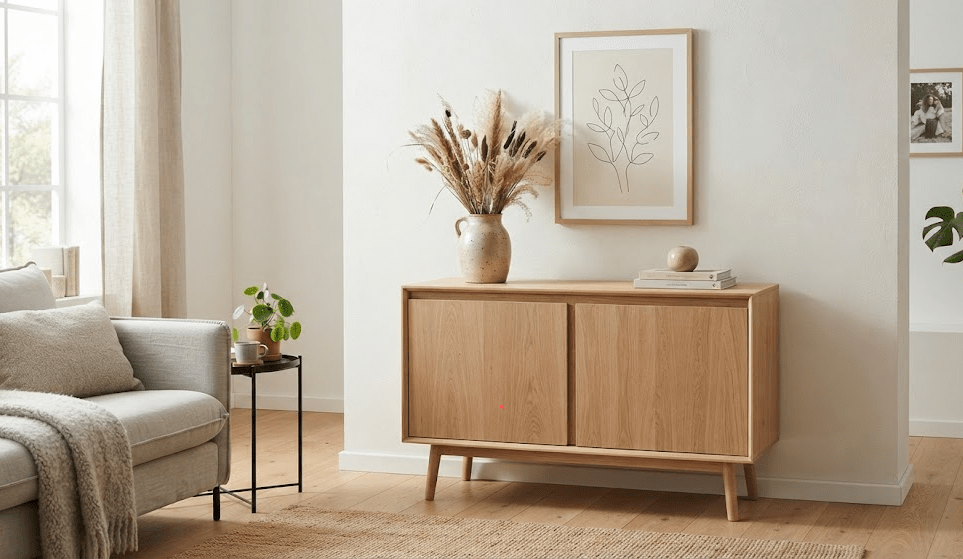
2. Mid-Century Modern
Key features:
- Tapered legs, raised off the floor.
- Warm oak or teak tones.
- Simple, rounded or rectangular forms with subtle detailing.
How a 70cm sideboard fits:
A 70cm sideboard in a mid-century scheme acts like a compact credenza, perfect for small living rooms or dining corners.
- Look for units on slim, angled legs to create a light, airy feel.
- Warm oak finishes work especially well with typical mid-century palettes (mustard, teal, brown, olive).
- Keep hardware simple: wooden knobs or understated metal pulls.
Styling tips:
- Top: A retro-style lamp, a couple of coffee table books, a small plant (e.g. monstera or snake plant).
- Above: A framed abstract print or sunburst-style mirror.
- Inside: Vinyl records, board games, barware – things that fit the era’s vibe.
This style benefits from the 70cm width because it reads as a purposeful accent piece rather than a bulky wall unit.
3. Scandinavian
Key features:
- Light woods (ash, light oak), often with visible grain.
- Simple, functional forms.
- Soft, neutral colour schemes with occasional muted accents.
How a 70cm sideboard fits:
In a Scandi interior, a 70cm sideboard becomes a light, functional storage piece that supports a calm, uncluttered space.
- Choose light oak or pale painted finishes.
- Prefer simple door fronts and minimal ornamentation.
- Raised legs help maintain the “light and airy” feel typical of Scandinavian design.
Styling tips:
- Top: A ceramic vase with dried grasses, a simple candle, a small stack of books.
- Above: A large, light-framed print or mirror to reflect natural light.
- Textiles: Add a wool runner or rug in front to soften the look.
Because Scandi design values function, use the interior storage for everyday items (blankets, linens, kids’ toys) to keep surfaces clear.
4. Industrial
Key features:
- Mix of metal and wood (often reclaimed or darker oak).
- Utilitarian look with visible hardware.
- Darker tones: black, charcoal, walnut, gunmetal.
How a 70cm sideboard fits:
In an industrial scheme, a 70cm sideboard can act as a compact storage cabinet with a rugged, functional aesthetic.
- Look for designs with metal frames, black handles, or mixed materials.
- Darker oak or stained finishes complement exposed brick, concrete or metal accents.
- A slightly boxier form works well here; you don’t need delicate legs.
Styling tips:
- Top: Metal lamp, leather tray, small industrial-style object (gears, vintage camera, etc.).
- Above: Black-framed prints, old maps, or a metal wall clock.
- Inside: Tools, bar equipment, media gear – things that fit the “workshop” feel.
A 70cm width keeps the piece from overwhelming smaller urban flats while still delivering that industrial character.
5. Traditional / Farmhouse
Key features:
- Panelled doors, mouldings, more detailed profiles.
- Warm oak, painted creams, greens or blues.
- Classic hardware (cup handles, knobs).
How a 70cm sideboard fits:
In a traditional or farmhouse interior, a 70cm sideboard becomes a small buffet or side cabinet with a timeless feel.
- Choose designs with panelled doors and some decorative detailing.
- Warm oak or painted finishes (e.g. sage, navy, cream) work well.
- Classic hardware reinforces the traditional look.
Styling tips:
- Top: A pair of ceramic jugs or lamps, a wooden bowl, maybe a framed botanical print.
- Above: A traditional mirror with a wood or ornate frame, or a set of small framed prints.
- Inside: Table linens, serving dishes, candles – proper “dining room” storage.
Even at 70cm, a well-detailed sideboard can anchor a traditional corner without needing a full-length unit.
6. Contemporary Eclectic / Mixed Styles
Many UK homes don’t fit neatly into one style; they blend elements from several.
How a 70cm sideboard fits:
A compact 70cm sideboard is ideal for eclectic interiors because:
- It’s small enough not to clash with varied furniture.
- You can choose a neutral design (simple oak or painted) that bridges different styles.
- It can be restyled over time as your taste evolves.
Styling tips:
- Mix materials on top: a modern lamp, vintage books, a handmade ceramic object.
- Use bold artwork or a gallery wall above to tie together different eras.
- Inside, store by function rather than style – this keeps the room feeling curated, not chaotic.
If your home is a mix of old and new, a straightforward 70cm oak sideboard often works better than a highly stylised piece.
Matching Style to Room Function
As well as overall interior style, consider how you’ll use the sideboard:
- Dining room: Traditional, farmhouse or mid-century styles often suit buffet-style use.
- Hallway: Modern, Scandi or industrial styles work well as console-like pieces.
- Living room: Mid-century, modern or eclectic styles fit as compact credenzas.
Our earlier guide on how to style a narrow 70cm sideboard goes into specific layouts for each room type.
Choosing the Right 70cm Sideboard for Your Style
Once you know your target style:
- Browse our 70cm-wide sideboards and note which designs align with your preferred look (leg style, door detail, finish).
- Check dimensions against your space using our How to Measure a Tight Space for a 70cm Sideboard guide
- Think about how you’ll style the top and what you’ll store inside; this often narrows down the best design quickly.
A 70cm sideboard can complement virtually any interior style when you match its form, finish and hardware to the rest of the room. The compact width makes it especially useful in UK homes where space is at a premium but style still matters.