
A small oak sideboard can look stylish without needing a complicated display. The key is to choose a few useful or meaningful items, vary their height and leave enough of the oak surface visible to keep the room feeling calm.
There is no single formula that works for every sideboard. The available width, depth, finish, wall colour, lighting and your everyday needs should guide the arrangement. Start with the five principles below, then adjust them to suit your room.
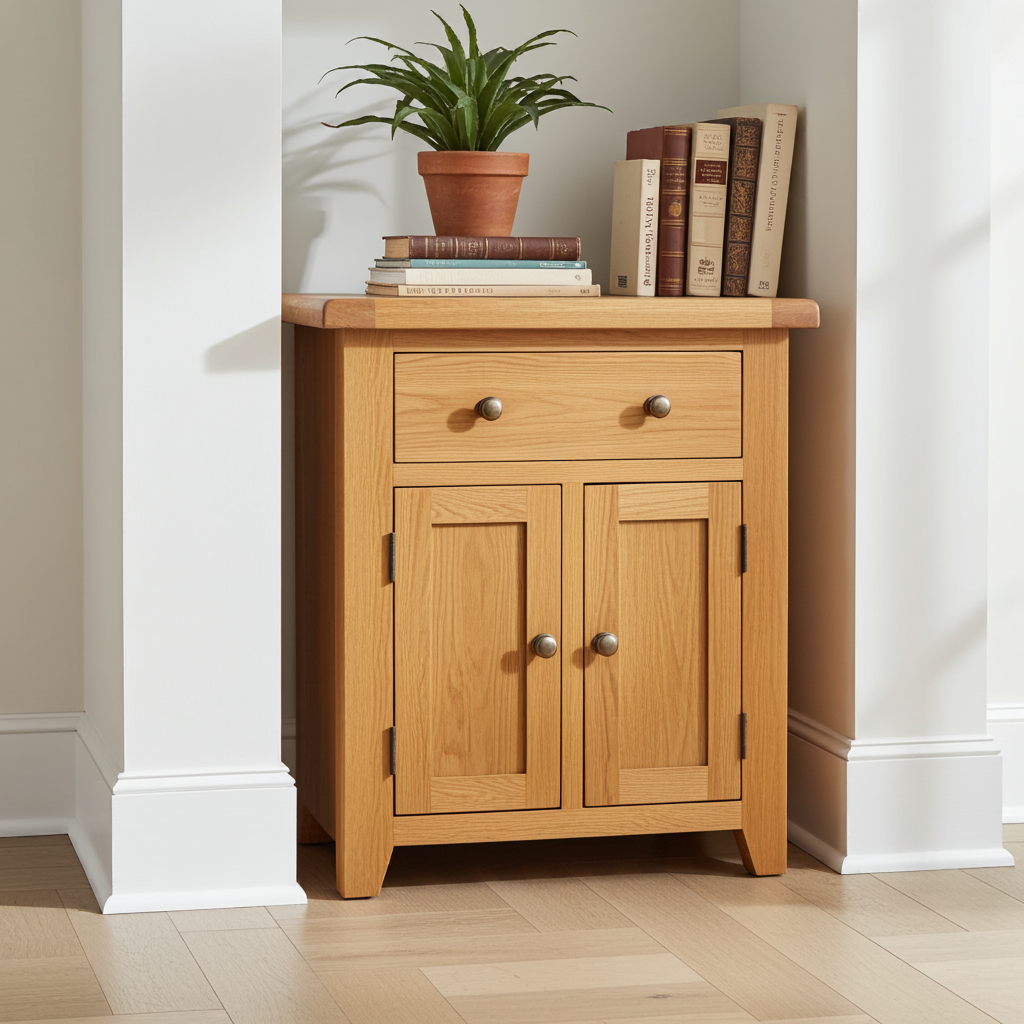
1. Use Odd Numbers as a Starting Point
Groups of three or five often create a relaxed, layered arrangement. They can be easier to balance than a row of identical pairs, but odd numbers are a helpful starting point—not a strict rule.
On a compact sideboard, try:
- A tall vase, a framed photograph and a small box.
- A plant, a lamp and a bowl.
- A leaning print, a medium ceramic piece and a low stack of books.
If you prefer a symmetrical pair of lamps or candlesticks, use them. Symmetry can work particularly well when the sideboard is beneath a mirror or artwork. The important point is to choose the arrangement deliberately.
For storage inspiration, browse small oak sideboards and compare the actual width and depth of the piece before planning your display.
2. Vary Height and Shape
A display made entirely from objects of the same height can look flat. Combine a taller item with one or two lower objects to create a more natural visual rhythm.
- Tall item: A vase, plant, lamp, sculpture or leaning piece of artwork.
- Medium item: A framed photograph, ceramic vessel or decorative box.
- Low item: A bowl, book, tray or small object placed toward the front.
Place the tallest item slightly to one side rather than directly in the centre if you want a more relaxed arrangement. Leave enough distance between objects for their shapes to remain clear.
Layering can also add depth. Lean artwork against the wall, place a smaller object in front and keep the arrangement shallow enough that it does not interfere with doors, drawers or everyday use.
3. Coordinate the Colours
The accessories do not need to match the sideboard exactly. They should either share a calm colour relationship or provide a deliberate contrast.
Warm and natural
Warm oak works well with cream ceramics, natural fibres, woven baskets, tan leather, warm metal and green plants. This creates a relaxed scheme that lets the timber remain the main feature.
Light and contemporary
Light oak can be paired with soft grey, white, pale blue or muted green accessories. Glass and light-coloured ceramics can help a small room feel visually open.
Dark contrast
Dark ceramics, charcoal frames or black metal can create definition against light oak. Repeat the darker accent elsewhere in the room so it feels connected rather than isolated.
Choose one main accent colour and repeat it in two or three small details if you want the display to feel coordinated. Avoid adding several unrelated bright colours to a small surface, because they can compete with the grain of the oak.
4. Leave the Oak Surface Visible
A small sideboard does not need to be covered from end to end. Leaving part of the top clear gives the timber room to breathe and makes the display easier to maintain.
Rather than calculating an exact percentage, step back and ask three questions:
- Can I still see enough of the oak finish?
- Can I clean the surface without moving a large collection of objects?
- Can I open the doors and drawers comfortably?
You can cluster the accessories toward one side and leave the other side mostly clear. Alternatively, place one central group with generous space around it. Both approaches can work; the right choice depends on the width and shape of your sideboard.
5. Choose Items That Earn Their Place
The most successful displays combine useful objects with pieces you genuinely like. A sideboard is not a museum display, so choose items that suit the way you live.
- Plants and flowers: Add colour, texture and height.
- Artwork and photographs: Bring personality and a focal point.
- Books: Add height and interest, especially when stacked horizontally.
- Bowls and trays: Provide useful places for keys or small items.
- Vases and serving pieces: Can be decorative while remaining practical.
- Lamps: Add useful evening light as well as height.
Remove damaged, unfinished or rarely valued items. A small display usually looks stronger when every object has a purpose, a personal meaning or a form you genuinely enjoy.
Simple Display Formulas
Three-piece arrangement
Place a tall vase or plant on one side, a medium framed piece near the centre and a low bowl or book toward the opposite side. Adjust the spacing until the group feels balanced without becoming symmetrical.
Five-piece arrangement
Use two taller pieces at different heights, one medium focal point and one or two low objects. Keep the arrangement shallow on a narrow sideboard and avoid creating a continuous line of objects.
One focal piece
A single large mirror, artwork or sculptural vase can work well when the sideboard is very narrow. Add only one or two smaller objects if they support rather than compete with the main piece.
Styling Examples
Light oak sideboard in a simple room
Try a cream ceramic vase, a framed botanical print and a small stack of books. Add one muted green or blue accessory to connect the display with soft furnishings or wall colour.
Dark oak sideboard in a dining room
Use warm metal, a low serving bowl, a small plant and artwork with cream or tan tones. Keep enough of the darker oak visible so the display does not become visually heavy.
Sideboard in a hallway
Prioritise function. A lamp, tray, bowl or small box can create a styled appearance while giving keys, post and other everyday items a place to go. Avoid deep or unstable objects that reduce the walking space.
Common Mistakes to Avoid
- Filling every inch: Too many accessories hide the sideboard and make cleaning difficult.
- Using identical heights: Vary the scale so the display has visual movement.
- Ignoring the wall behind it: Wall colour and artwork affect how the accessories appear.
- Using too many colours: Keep the palette controlled and repeat accent colours.
- Blocking doors or drawers: Style around the furniture’s function.
- Using unstable objects: Avoid heavy or breakable items where children or pets could knock them down.
- Mixing too many metals: Choose one main metal finish unless the contrast is deliberate.
Seasonal Updates
You do not need to redesign the entire sideboard throughout the year. Swap one or two small elements:
- Spring and summer: Fresh flowers, lighter ceramics, glass and botanical prints.
- Autumn: Warm-toned vessels, darker accessories, books and natural textures.
- Winter: Soft metallics, greenery, candles used safely and deeper accent colours.
Keep the main arrangement stable and change only the pieces that are easy to move. This prevents seasonal styling from becoming another source of clutter.
Match the Sideboard to the Room
Styling works best when the sideboard is considered alongside the wall colour, lighting and other furniture. For guidance on choosing between light and dark oak, read Light vs Dark Oak Sideboards: Matching Tone to Wall Colour and Lighting.
For advice on coordinating a light oak finish with paint and accessories, see Styling Your Light Oak Sideboard: Paint Colours and Accessories.
Final Styling Checklist
- Have you chosen one main focal point?
- Do the accessories vary in height and shape?
- Are the colours connected to the wider room?
- Is enough of the oak surface still visible?
- Can the doors, drawers and walking routes remain clear?
- Are the displayed items useful, meaningful or genuinely attractive?
- Are objects stable and suitable for the room?
Conclusion
Styling a small oak sideboard is less about following rigid rules and more about making deliberate choices. Start with a focal piece, add height variation, repeat one or two colours and leave enough clear surface for the oak to remain part of the design.
Odd-number groupings, negative space and functional accessories are useful starting points, but your room, furniture size and daily routine should decide the final arrangement. A small display that is easy to use and genuinely reflects your style will always work better than a crowded surface designed to follow a formula.