
Introduction
Even small sideboards consume floor space. For those navigating truly constrained living environments—micro-apartments, narrow hallways, or rooms where every inch matters—traditional sideboard designs might feel excessive. Fortunately, innovative alternatives deliver storage and display functionality while demanding minimal physical footprint.
This guide explores storage solutions that achieve sideboard functionality through reimagined approaches, helping you optimize organization without compromising the comfortable flow essential to small space living.
Understanding Your Space Constraints
The 30-Inch Clearance Imperative
Before exploring alternatives, establish your actual spatial parameters. Comfortable room flow requires minimum 30 inches of clearance between furniture pieces and walls. In extremely compact spaces, even this standard clearance leaves limited room for additional pieces.
Calculate your available wall space: measure total wall length, subtract doorways and windows, deduct clearance requirements, and determine what remains. This honest assessment prevents purchasing alternatives that technically fit but compromise comfortable movement.
Distinguishing Between Storage Needs
Storage falls into distinct categories:
- Display items: Decorative pieces, books, treasured objects requiring visibility
- Hidden storage: Items you use regularly but prefer concealed (linens, seasonal goods)
- Accessible daily use: Items needed frequently (remote controls, reading materials, household essentials)
- Archive storage: Rarely accessed items requiring long-term organization
Different space constraints suit different storage categories. Some alternatives excel at display while offering minimal hidden capacity; others prioritize concealment with minimal display potential.
Floating Shelves: Lightweight Vertical Storage
Design Advantages
Floating shelves represent the most space-efficient alternative to sideboards, offering several compelling advantages:
- Zero floor footprint: Wall-mounted installation eliminates furniture legs and baseboard projection
- Visual lightness: Open shelving creates perception of space rather than visual weight
- Flexible arrangement: Multiple shelf heights and configurations customize to your specific needs
- Display-focused: Open shelves inherently encourage curated, attractive arrangement
- Budget-accessible: Quality floating shelves cost 40-60% less than comparable sideboards
For compact spaces, floating shelves trade hidden storage capacity for visual openness—a worthwhile compromise when floor space is precious.
Optimal Implementation
Floating shelf success depends on three factors:
Proportion: Shelf width should relate to available wall space—typically 60-100cm for small rooms. Oversized shelves dominate confined spaces; undersized shelves feel insubstantial. Three shelves at varying heights create visual interest without overwhelming.
Styling discipline: Open shelves demand intentional curation. Every visible item contributes to room aesthetics. Embrace minimalism or thoughtful abundance, but avoid cluttered appearance that creates psychological chaos in already-tight spaces.
Weight management: Floating shelves have weight limits (typically 15-25kg depending on wall type and bracket quality). Distribute weight evenly, avoiding concentration of heavy items on single shelves.
Products by Tag
-
Grey Mini Sideboard 2 Doors 1 Drawer
Original price was: £325.00.£205.00Current price is: £205.00. -
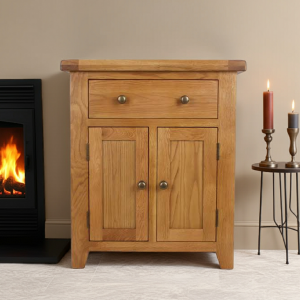
Mini Sideboard 2 Doors 1 Drawer
Original price was: £325.00.£255.00Current price is: £255.00.

Material Considerations
Oak floating shelves reference the warmth and sophistication of traditional sideboards while maintaining visual lightness. Mixed materials—oak shelves with metal brackets, for instance—introduce contemporary elements that counter “too traditional” aesthetics.
For truly minimalist interiors, white or black floating shelves disappear visually, allowing displayed items rather than furniture to dominate perception.
Slim Console Tables: Narrow Sideboards‘ Sophisticated Cousins
When Console Tables Excel
Console tables occupy a design category between traditional sideboards and floating shelves. Typically 25-35cm deep and 80-120cm wide, consoles deliver storage and display within an intentionally narrow footprint.
Consoles work exceptionally well:
- In hallways: Creating welcoming entry areas without dominating narrow passages
- Behind sofas: Providing surfaces for lamps, books, and decorative items in living rooms
- Along bedroom walls: Functioning as desk/dressing table hybrids
- In dining areas: Offering sideboard functionality without full-depth commitment
Unlike sideboards with substantial storage cavities, consoles prioritize surface display and a single shelf or minimal storage below. This design shift emphasizes aesthetics while maintaining functional utility.
Console vs. Sideboard Trade-offs
Sideboard advantages:
- Superior hidden storage capacity
- Enclosed design conceals clutter
- Substantial presence grounds rooms
- Capable of supporting TV or display items without wobbling
Console advantages:
- Minimal floor footprint
- Visual lightness maintains space perception
- Surface display encourages attractive arrangement
- Lower visual weight in compact interiors
For micro-apartments or hallways, consoles’ visual lightness outweighs storage capacity limitations. For living rooms, sideboards typically provide more satisfactory functionality.
Wall-Mounted Cabinets: Compact Storage Without Floor Impact
Advantages for Ultra-Tight Spaces
Mounted directly to walls, these cabinets eliminate floor footprint entirely while providing concealed storage comparable to small sideboards. A 60cm-wide, 40cm-tall mounted cabinet delivers 24-30 cubic feet of storage—respectable capacity considering zero floor consumption.
Design Considerations
Height placement: Mounting cabinets at eye level (approximately 120-140cm from floor) creates visual balance and accessibility. Mounting too high or too low creates proportional awkwardness in compact rooms.
Visual weight: Single-door designs maintain lightness; double-door cabinets begin dominating wall spaces. In truly small areas, mounted cabinets should occupy no more than 30-40% of available wall space to preserve openness.
Material selection: Oak mounted cabinets maintain warmth and sophistication while the wall-based positioning limits visual weight compared to floor-standing pieces.
Slim Chest of Drawers: Vertical-Focused Storage
Why Height Matters in Compact Spaces
A fundamental principle of small space design prioritizes vertical utility over horizontal footprint. Slim chests of drawers—typically 35-45cm wide and 120-150cm tall—embody this principle perfectly.
These narrow, tall pieces deliver surprising storage capacity (15-20 cubic feet depending on configuration) while consuming minimal floor area. A slim 5-drawer chest occupies less floor space than a small sideboard while often providing equivalent storage volume through vertical organization.
Drawer Configuration Benefits
Multiple drawers encourage organization and accessibility:
- Tiered storage: Different drawer depths accommodate various item sizes
- Visual interest: Horizontal lines from drawer fronts create rhythm in vertical pieces
- Daily accessibility: Frequently used items integrate into drawer rotation rather than requiring excavation through sideboard cavities
For hallways, bedrooms, and living rooms, slim chests bridge the functionality gap between space-efficient shelving and substantial storage furniture.
Open-Back Bookcases: Display with Breathing Room
The Transparency Advantage
Bookcases with open backs create visual continuity, making rooms feel more spacious than enclosed-back equivalents. Even substantial bookcases maintain visual lightness when nothing exists behind them.
Strategic Placement
Position open-back bookcases:
- Dividing spaces: Creating visual separation between zones without blocking sightlines
- Anchoring room corners: Drawing vertical emphasis without creating enclosed feeling
- Behind seating: Adding texture and interest without consuming additional floor area
Oak bookcases introduce warmth while the open-back design prevents the enclosed, heavy feeling traditional enclosed storage units create.
Elfa Shelving and Adjustable Systems: Ultimate Flexibility
The Customization Advantage
Adjustable shelving systems (like Elfa) provide unmatched flexibility for evolving storage needs. Install shelves at custom heights accommodating specific items, adjust spacing as needs change, and reconfigure without permanent modifications.
Small Space Implementation
These systems excel in unconventional spaces: gable ends, alcoves, irregular wall configurations. By customizing spacing and dimensions, systems adapt to architectural quirks rather than requiring compromise. We have a great selection of oak sideboard 100cm wide that fit neatly in many spaces.
For renters particularly, adjustable systems provide storage sophistication without permanent wall damage beyond pilot holes.
The Combination Approach: Layered Storage Solutions
Maximum Efficiency Through Integration
Rather than selecting single solutions, combining approaches maximizes both storage capacity and visual balance:
- Floating shelves for display: Open shelving showcasing decorative items and books
- Wall-mounted cabinet for concealment: Closed storage for items you prefer hidden
- Slim console table: Creating functional surface and additional lower storage
- Narrow floor cushions or ottomans: Providing seating and hidden storage simultaneously
This layered approach distributes storage across multiple fixtures, preventing any single piece from dominating the visual landscape while achieving comprehensive organization.
Material Selection Across Alternatives
Oak’s Versatility Beyond Sideboards
Oak’s sophistication translates beautifully across alternative storage formats. Oak floating shelves, wall-mounted cabinets, and slim chests introduce warmth and durability identical to traditional sideboards while the alternative forms suit constrained spaces better.
Mixing oak with other materials—metal brackets, painted bases, glass surfaces—enhances modern appeal while maintaining the durability and elegance oak provides.
Styling Your Alternative Storage Solution
Creating Cohesion in Compact Spaces using our oak sideboard for 80cm wide
Regardless of which alternative format you select, styling principles remain consistent:
Proportion: Items displayed shouldn’t exceed 70% of available space—negative space breathes life into compact interiors.
Color harmony: Display pieces should complement your overall color scheme rather than competing for attention.
Texture layering: Combine smooth surfaces with textured items, creating visual interest without clutter.
Personal curation: Include meaningful objects—family photos, treasured books, meaningful keepsakes—that make spaces feel genuinely yours.
Practical Installation Considerations
When Professional Installation Matters
Complex shelving systems, weight-bearing wall mounts, and custom configurations benefit from professional installation. While DIY is possible, professionals ensure structural integrity and optimal safety—important considerations in rental properties where landlord approval requirements apply.
Budget 15-25% of furniture cost for professional installation; this insurance against damage and instability often proves worthwhile.
Returning to Traditional Solutions
When Sideboards Remain the Better Choice
For living rooms with adequate floor space, sideboards still offer advantages alternatives cannot replicate. Hidden storage capacity, surface stability, and visual presence that grounds rooms justify traditional approaches when space permits.
For those with slightly more flexibility than ultra-tight constraints allow, small sideboards remain ideal. Discover small oak sideboards optimized for compact living, which provides comprehensive guidance when traditional storage solutions work for your space.
Making Your Decision: Questions to Consider
- How much floor space can I genuinely dedicate to storage furniture?
- Do I need primarily display space or hidden storage capacity?
- What aesthetic emerges from my décor—minimalist, traditional, eclectic?
- Is my living situation permanent or transitional? (Rental considerations influence permanent installation feasibility)
- What items specifically require storage and display?
Conclusion: Storage Solutions Matched to Reality
Sideboard alternatives exist because real living—particularly in compact spaces—demands flexibility. Rather than forcing traditional furniture into spaces where they compromise comfort, intelligent alternatives achieve organization and aesthetic appeal while respecting spatial constraints.
Whether floating shelves, slim consoles, wall-mounted cabinets, or adjusted approaches, your storage solution should enhance your daily living experience rather than complicating it. Choose based on honest assessment of your space, storage needs, and aesthetic preferences.
The best alternative storage solution is the one that makes your compact space feel organized, beautiful, and genuinely yours.