
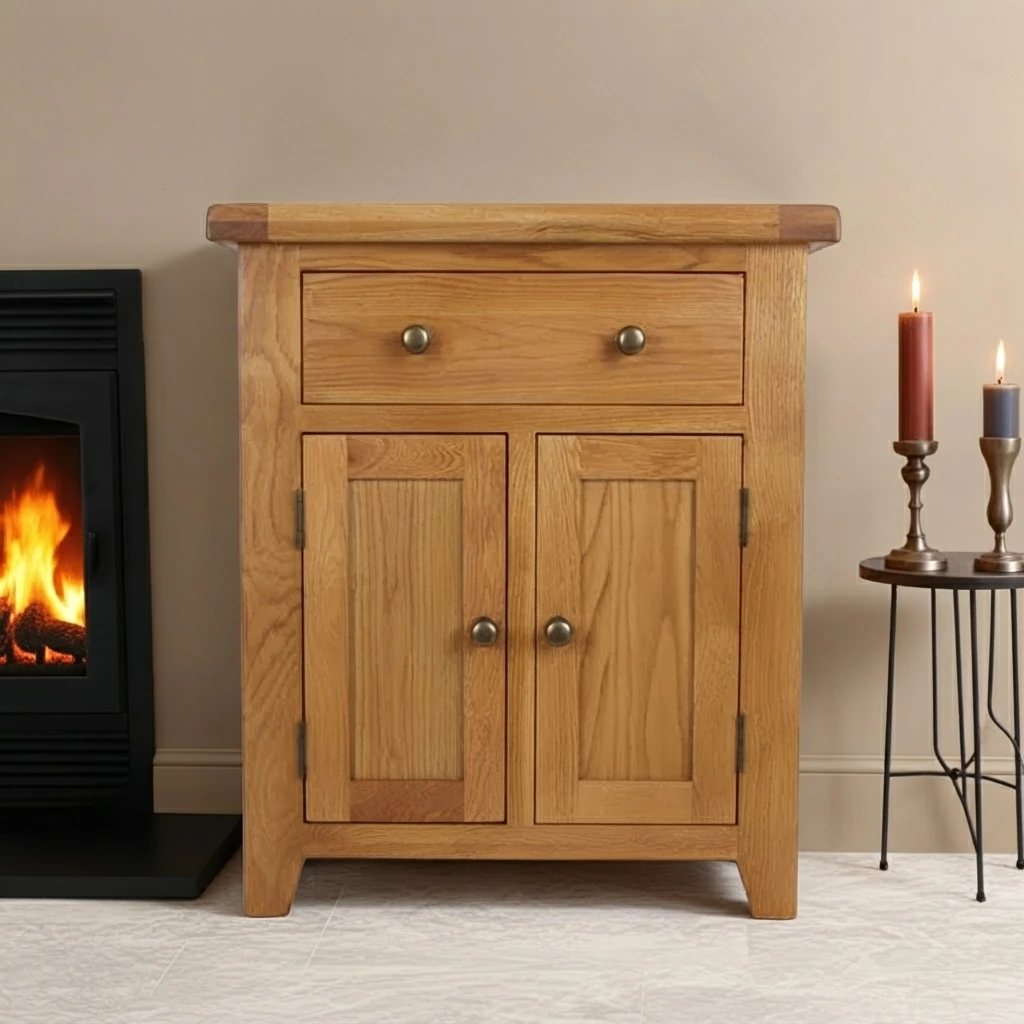
An oak sideboard is a practical storage piece, but it can also become one of the most characterful features in your dining room, living room or hallway. Styling it with vintage finds gives the space a more personal, collected look—mixing the natural warmth of oak with objects that have colour, texture, history or sentimental value.
The most effective vintage sideboard display does not need to be crowded. A few well-chosen pieces, arranged at different heights and balanced with space around them, can make the furniture feel distinctive while keeping the surface useful for everyday life.
Whether you love antique ceramics, old books, brass candlesticks, family photographs or flea-market finds, these ideas will help you create a sideboard display that feels relaxed, intentional and uniquely yours.
Choose a Sideboard That Fits the Space
Before thinking about accessories, make sure the sideboard itself is the right size for the room. It should provide the storage you need without narrowing walkways or making the space feel heavy.
Measure:
- The width of the wall where the sideboard will sit.
- The depth of the sideboard and the remaining walking space.
- Clearance needed to open cupboard doors and drawers.
- The height of nearby windowsills, radiators or wall art.
- The scale of the mirror, artwork or lamp you may place above it.
A smaller sideboard can work beautifully in a compact dining room, hallway or flat. It offers a useful display surface without dominating the room. Browse our collection of small oak sideboards for storage suited to tighter spaces.
If you have a large dining room, a long living-room wall or a substantial collection of tableware and decorative pieces, a wider design may provide more storage and a stronger visual focal point. Explore our range of large oak sideboards for larger spaces.
Start With a Clear Surface
The easiest way to style a sideboard is to begin with nothing on it. Remove post, chargers, loose paperwork and decorative items, then clean the surface with a soft cloth.
Starting with a blank surface helps you see the furniture properly and makes it easier to decide what deserves to be displayed.
Ask yourself:
- What do I want this sideboard to do every day?
- Will it need to stay clear for serving food or drinks?
- Do I need a place for keys, post or remote controls?
- Is the display mainly decorative, practical or a mix of both?
- Which vintage pieces are genuinely meaningful or visually interesting?
A sideboard in a dining room may need clear space for drinks and serving dishes. A hallway sideboard may need a tray for keys and post. A living-room sideboard may need a lamp and a discreet place for remote controls.
The most successful display leaves enough room for the sideboard to remain useful.
Choose a Small Collection of Vintage Pieces
A vintage display works best when it feels edited. Rather than placing every treasured object on one surface, choose a small collection that shares a colour, material, era or personal connection.
Good vintage sideboard pieces include:
- Old hardback books.
- Framed family photographs.
- Ceramic vases and jugs.
- Stoneware bowls.
- Brass candlesticks.
- Old mirrors.
- Vintage clocks.
- Decorative boxes.
- Small oil paintings or prints.
- Glass bottles and apothecary jars.
- Silver-plated trays.
- Old maps, postcards or handwritten letters in frames.
- Wooden objects, such as carved bowls or small boxes.
- Antique-style lamps.
- Vintage tableware and serving pieces.
Try to choose pieces with different textures. For example, the smooth surface of a ceramic vase can look striking beside an old brass candlestick, a stack of worn books and a leafy plant.
Avoid displaying too many unrelated items at once. If every object is competing for attention, the arrangement can look cluttered rather than collected.
Use the Rule of Three
The “rule of three” is a simple styling principle that works well on a sideboard. Grouping three objects of different heights often creates a balanced arrangement without looking too formal.
For example, try:
- A tall vintage lamp.
- A medium-height framed print or vase.
- A low stack of books, bowl or candleholder.
You can repeat this idea at opposite ends of a larger sideboard, leaving breathing space between the two groups.
A useful display formula is:
- One tall item such as a lamp, mirror, framed artwork, tall vase or branches.
- One medium-height item such as a framed photograph, ceramic jug, stack of books or smaller vase.
- One low object such as a bowl, tray, candleholder or decorative box.
Varying height is important. If every item is the same size, the display can feel flat. A mixture of taller and lower pieces creates depth and gives the eye somewhere to move.
Add a Mirror or Artwork Above the Sideboard
The wall above a sideboard is as important as the furniture surface. A mirror, artwork or gallery arrangement can create a focal point and make the display feel connected to the room.
Use a Vintage Mirror
A vintage-style mirror can reflect natural light, make a narrow room feel brighter and add character above an oak sideboard.
Choose a mirror that is proportionate to the furniture. It should feel related to the sideboard’s width without necessarily matching it exactly.
A simple guide is to choose a mirror or artwork that is around two-thirds to three-quarters of the width of the sideboard. This is not a fixed rule, but it can help create a balanced overall composition.
Use Framed Art
Artwork can give the display more personality. A large framed print, old landscape painting, botanical illustration or vintage poster can work especially well with natural oak.
For a relaxed look, lean a larger frame against the wall behind the sideboard. For a more formal finish, hang the artwork centrally above the furniture.
Avoid using lots of small unrelated frames unless you are creating a deliberate gallery wall. One larger piece often has more impact and creates a calmer focal point.
Mix Vintage Items With Natural Greenery
Greenery stops a vintage display from feeling overly formal or museum-like. A leafy houseplant, a simple branch arrangement or fresh flowers can add softness and contrast with the warm tones of oak.
Try:
- Olive, eucalyptus or willow branches in a ceramic jug.
- Fresh flowers in a vintage glass bottle.
- A trailing plant in a simple stoneware pot.
- Dried grasses or seed heads in a tall vase.
- Seasonal foliage, such as autumn branches or winter greenery.
Choose a vessel that complements the other pieces. A vintage jug, stoneware vase, coloured-glass bottle or simple ceramic pot can all work well.
Keep the arrangement practical. Do not place water-filled vessels near electrical lamps or on an unprotected wooden surface. Use a tray, coaster or waterproof liner beneath the vase to help protect the sideboard from moisture marks.
Create a Useful Vintage Drinks Station
In a dining room, an oak sideboard can become a stylish drinks station for family meals and entertaining. Vintage barware, glassware and serving pieces can add character while keeping the area functional.
Use the top surface for:
- A vintage tray.
- A carafe or water jug.
- A small collection of glasses.
- A decanter or a few favourite bottles.
- A bowl for citrus or cocktail garnishes.
- Coasters and cloth napkins.
- A candleholder or small lamp.
Use drawers and cupboards for:
- Extra glassware.
- Bottle openers and corkscrews.
- Serving trays.
- Coasters and placemats.
- Table linen.
- Serving utensils.
- Less frequently used entertaining pieces.
Keep drinks and decorative items contained on a tray so they are easy to move when you need the surface for food or dessert.
For more dining-room storage and entertaining options, browse our complete range of oak sideboards.
Style Different Sideboard Sizes
The width of your sideboard changes how you should arrange decorative objects.
| Sideboard size | Best styling approach |
|---|---|
| Small sideboard | Use one lamp or vase, one framed print or mirror, and one small tray. Keep the surface simple. |
| Medium sideboard | Create one taller focal point at an end, then balance it with a smaller grouping at the other end. |
| Large sideboard | Create two balanced styling zones, using a mirror or artwork as the central anchor. Leave open space between the groups. |
| Extra-large sideboard | Use a central artwork or mirror, a lamp or plant at each end, then add a low arrangement or tray in the middle. |
A large sideboard does not need more objects simply because it has more surface area. It needs stronger visual anchors and more intentional spacing.
For a wider choice of storage furniture in different widths and layouts, explore our collection of oak sideboards.
Pair Oak With Vintage Materials
Oak works well with vintage materials because its grain and natural warmth create an easy backdrop for objects with age, patina and texture.
Try pairing oak with:
- Aged brass or antique-gold candleholders.
- Stoneware and handmade-look ceramics.
- Smoked, coloured or clear glass.
- Silver-plated trays and serving pieces.
- Woven baskets.
- Linen runners or fabric-covered books.
- Matte-black picture frames.
- Aged leather-bound books.
- Copper bowls or jugs.
- Natural linen lampshades.
- Old wooden frames and carved objects.
The goal is contrast without clutter. If your sideboard has a warm oak finish, add a small amount of darker metal or coloured glass for depth. If the room already has darker furniture, use lighter ceramics and greenery to keep the display from feeling heavy.
Use Family Pieces and Personal Objects
Vintage styling does not need to mean buying antiques. Some of the most meaningful displays use personal objects that already have a story.
Consider displaying:
- A framed family photograph.
- A grandparent’s tea set or serving bowl.
- Old travel photographs.
- A handwritten recipe in a simple frame.
- A favourite inherited book.
- A collection of postcards.
- A small object collected during a holiday.
- A vintage clock or jewellery box.
- A child’s drawing in a quality frame.
Choose one or two sentimental items rather than displaying everything at once. Rotating pieces through the seasons can keep the arrangement fresh while ensuring treasured objects remain protected and visible.
Keep the Display Safe and Practical
Vintage items can be fragile, heavy or difficult to replace. A few simple habits can help protect both the objects and the oak sideboard beneath them.
- Use felt pads beneath lamps, bowls, vases and decorative objects.
- Keep heavy items away from the edge of the sideboard.
- Use museum putty or discreet non-slip pads for unstable ornaments, where appropriate.
- Keep open flames away from curtains, dried flowers and other flammable materials.
- Use battery candles if children, pets or busy walkways make open flames unsuitable.
- Keep liquids on a tray or coaster.
- Wipe up spills promptly with a soft cloth.
- Avoid placing very hot dishes directly onto the wood.
- Keep valuable or fragile items out of reach of children and pets.
- Follow the care instructions for your specific furniture finish.
For more detailed care guidance, read our article on how to care for an oak sideboard.
Refresh Your Display Through the Year
A sideboard display does not need to stay the same all year. Refreshing a few items seasonally can make the room feel different without changing the furniture.
Spring
Use fresh flowers, pale ceramics, botanical prints and lighter-coloured books or linen.
Summer
Add clear glass, green foliage, woven accessories and a bowl of fruit.
Autumn
Style with branches, dried flowers, amber glass, warm-toned candles and darker textiles.
Winter
Use evergreen branches, candleholders, a simple wreath, seasonal tableware and a small number of festive decorative pieces.
Keep the overall structure the same: a tall focal point, a medium-height object, a lower tray or decorative grouping and enough empty space to keep the display calm.
Find an Oak Sideboard for Your Display
Styling an oak sideboard with vintage finds is about creating a display that feels personal rather than perfect. Choose a few meaningful objects, vary their height and texture, add greenery or warm lighting and leave enough space for the furniture to remain practical.
Whether you want a compact cabinet for a hallway or a wide statement piece for a dining room, browse our collection of oak sideboards to find a design that provides useful storage and a beautiful surface for your home.