
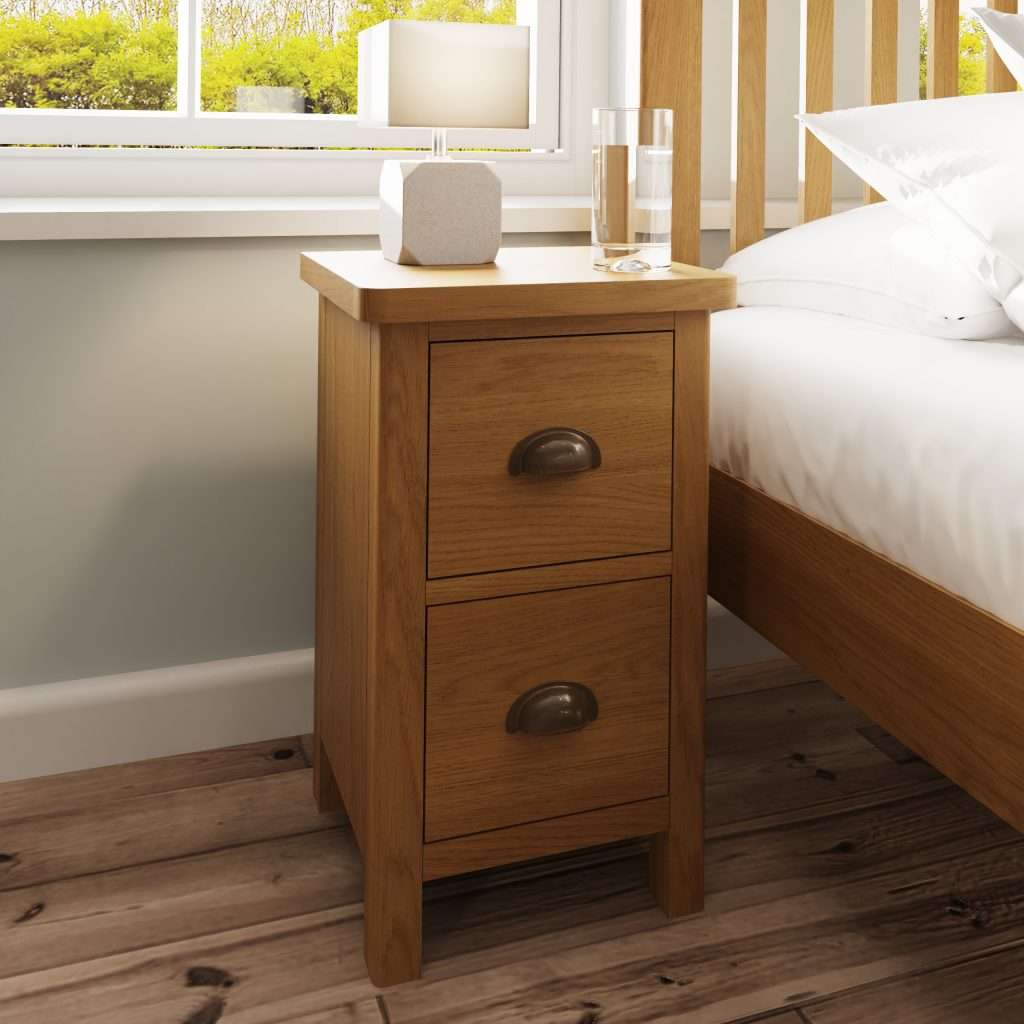
A slim bedside table can make a small bedroom feel more organised without taking up the floor space you need to move comfortably around the bed. It gives you a practical place for a lamp, phone, book and glass of water, while drawers or shelves can keep chargers, reading glasses and nighttime essentials out of sight.
In compact bedrooms, every centimetre matters. A deep or bulky bedside cabinet can make the room feel crowded, block access to a wardrobe or leave too little space beside the bed. A narrow bedside table provides the essentials in a more space-conscious footprint.
This guide explains how to choose a slim bedside table, measure the space correctly and organise it so your bedroom feels calmer and more practical.
Why Choose a Slim Bedside Table?
A slim bedside table is designed for bedrooms where space beside the bed is limited. It may be narrower, shallower or both, allowing it to fit into tighter gaps without making the room difficult to move around.
A narrow bedside cabinet can be particularly useful if you live in:
- A flat or apartment.
- A smaller new-build bedroom.
- A Victorian terrace or period home with an awkward layout.
- A box room or guest bedroom.
- A bedroom with fitted wardrobes close to the bed.
- A room where one side of the bed is against a wall.
- A compact child’s or teenager’s bedroom.
Even a small bedside table can provide useful storage. The original featured cabinet is 40cm wide and 25cm deep, with two drawers and an open shelf—an example of how a shallow footprint can still provide separate spaces for bedside essentials.
Browse our range of bedside tables to find practical storage for compact bedrooms.
Measure the Space Beside Your Bed
Before choosing a bedside table, measure the available gap rather than relying on what looks small in an online photograph.
Take note of:
- The width between the bed and wall, wardrobe or radiator.
- The maximum depth before the table enters the main walkway.
- The height of the top of your mattress.
- The height of the bed frame and headboard.
- The position of plug sockets and light switches.
- Clearance needed to open wardrobe doors or drawers.
- The route from the bed to the doorway or bathroom.
The table should be easy to reach from bed, but it should not make it difficult to walk around the room.
Choose the Right Height
A bedside table usually works best when its top is close to the height of the mattress, or slightly lower. This makes it easy to reach a lamp, drink, book or phone without stretching.
If the table is noticeably lower than the mattress, it may feel awkward to use. If it is much higher, it can look out of proportion and make a bedside lamp less comfortable.
Measure from the floor to the top of your mattress, then compare this with the listed product height before buying.
Check the Depth Carefully
Depth is often the biggest issue in a small bedroom. A table may fit beside the bed in terms of width, but still project too far into the walking area.
A slim 25cm-deep bedside cabinet can work where a standard 35–45cm-deep table would make the room feel too tight. However, you should still test the available space in your own room, especially near wardrobes, doors and radiators.
A useful trick is to mark the intended furniture footprint with masking tape or place a cardboard box in the space. This helps you see whether the table will affect your route around the room before you order it.
Choose the Right Storage Layout
The best slim bedside table is not necessarily the one with the most drawers. It is the one with storage that suits the items you use every night.
Think about what currently gathers beside your bed. Is it a phone and charger, several books, medication, skincare, reading glasses, earplugs or a notebook? Once you know what needs a home, choose the right drawer-and-shelf arrangement.
| Bedside-table feature | Best for |
|---|---|
| One drawer | Chargers, glasses, medication, remote controls and small essentials |
| Two drawers | Separating personal items from cables, books and sleep accessories |
| Open shelf | Current books, a small basket, a decorative object or extra storage box |
| Lower shelf | Magazines, a folded throw, slippers or a storage basket |
| Open-leg table | A lighter appearance in a very compact room |
| Cabinet with door | Hiding larger items or visual clutter |
A two-drawer table is useful when you want to separate items you need daily from things that should remain out of sight. For example, use the top drawer for quick-access essentials and the lower drawer for spare cables, sleep accessories or less frequently used items.
Organise a Small Bedside Cabinet
A slim bedside table has limited space, so a simple organisation system helps it work much harder.
Use the Top Drawer for Essentials
Keep the top drawer for small items you may need in the evening or first thing in the morning.
Useful items include:
- Reading glasses.
- A phone charger.
- Earplugs or a sleep mask.
- Hand cream or lip balm.
- A notebook and pen.
- Medication you need close by.
- A small torch.
- A remote control.
- Jewellery dish or watch storage.
Use a shallow organiser tray or small fabric pouch to stop loose items moving around inside the drawer.
Use the Lower Drawer for Back-Up Items
The lower drawer can hold items you do not need to reach every night.
Consider storing:
- Spare charging leads.
- Portable battery packs.
- Spare batteries.
- Extra reading glasses.
- A small first-aid kit.
- Travel adaptors.
- Seasonal sleep accessories.
- Spare sleep masks or earplugs.
- A book you plan to read next.
Avoid using bedside drawers as a permanent home for every spare cable and random household item. Keep only what you use in the bedroom, and move the rest to a dedicated storage box elsewhere.
Use an Open Shelf Carefully
An open cubby or shelf can be useful, but it can also look cluttered if it becomes a dumping ground.
Use it for:
- One or two current books.
- A small basket for chargers or personal items.
- A neatly folded sleep mask or eye pillow.
- A small framed photograph.
- A compact plant or bud vase.
- A simple decorative object.
Choose one purpose for the shelf. A basket can be particularly useful because it hides smaller items while keeping the area looking tidy.
Keep the Top Surface Clear
The top of a bedside table should be practical. A crowded surface can make a small bedroom feel more cluttered and leaves little room for the things you use most often.
A simple bedside arrangement could include:
- A small bedside lamp.
- A coaster and water glass.
- One book or e-reader.
- A phone charging point.
- A small dish for jewellery or glasses.
- A compact vase, candle or plant, if there is room.
If you use a lamp, choose one with a stable base that fits comfortably on the tabletop. Keep its cable routed safely behind the table or along the wall, avoiding a position where it could become a trip hazard.
Do not overload the surface with multiple candles, skincare bottles, chargers and decorative pieces. Use the drawers to hide items that are not needed every night.
Make a Small Bedroom Feel More Spacious
The furniture you choose has a major effect on how spacious a bedroom feels. A slim bedside table helps preserve walkway space, but several other simple changes can make the room feel more open.
Try these ideas:
- Choose a narrow or shallow bedside table rather than a large cabinet.
- Keep the floor clear beneath the bed where possible.
- Use under-bed storage for seasonal clothing, spare bedding and luggage.
- Choose a tall chest of drawers rather than a wide, low design if floor space is limited.
- Keep wardrobe doors and drawers easy to open.
- Use a mirror to reflect natural light.
- Choose lighter wall colours and bedding where appropriate.
- Keep visible surfaces simple and avoid excessive decorative accessories.
- Use baskets or boxes to group smaller items inside cupboards and drawers.
A tall, narrower chest of drawers can provide useful folded-clothing storage without taking up as much floor space as a wide chest. Browse our range of oak chests of drawers for storage that makes better use of wall height.
One Bedside Table or Two?
In a smaller room, you do not always need matching tables on both sides of the bed.
One bedside table may be enough if:
- One side of the bed sits against a wall.
- The room has a very narrow layout.
- You need to keep access clear to a wardrobe or doorway.
- Only one person uses the room.
- You already have storage elsewhere, such as a chest of drawers.
- You prefer a more open, minimal look.
If two people share the bed, consider a slim table on each side where possible. If there is not enough room for matching furniture, use a small table on one side and a narrow wall shelf or compact cabinet on the other.
The aim is not perfect symmetry. It is to give each person a useful place for their essentials without making the bedroom difficult to use.
Use a Slim Table Beyond the Bedroom
A narrow bedside cabinet may also be useful in other rooms, but its dimensions and intended use should guide the decision.
It may work as:
- A compact lamp table beside a sofa.
- A small storage table in a guest room.
- A narrow occasional table in a quiet hallway corner.
- A useful cabinet beside a reading chair.
- A small table in a home office for stationery or a printer, if the dimensions are suitable.
For a living room, choose a purpose-designed side table if you need more surface space for a lamp, drink and books. Browse our collection of small side tables for compact furniture designed to sit beside sofas, chairs and beds.
Avoid using a bedside cabinet in a bathroom unless the product is specifically suitable for humid conditions. Most bedroom furniture is not designed for persistent moisture, condensation or splashing water.
Choose a Finish That Suits Your Bedroom
A narrow bedside table can blend into the room or become a small feature beside the bed. The finish you choose will affect how heavy or light it feels in the space.
Light Oak
Light oak brings natural warmth while keeping the room bright. It works well with white, cream, pale grey, muted green and soft-blue bedrooms.
Pair it with linen bedding, pale ceramics, a simple lamp and a small plant for a relaxed, modern look.
Natural Oak
Natural oak adds more visible grain and warmth. It can suit both classic and contemporary bedrooms, particularly with neutral bedding, woven textures and warm lighting.
Painted Furniture
White, cream or light-grey painted bedside furniture can make a compact bedroom feel brighter, especially against pale walls. Oak tops or handles can add warmth and texture to a painted finish.
The best approach is to choose a finish that works with the bed frame, wardrobe and chest of drawers. The pieces do not have to match exactly, but repeating a colour or timber tone elsewhere in the room will help the furniture feel coordinated.
Care for Your Bedside Table
A bedside table is often used for drinks, lamps, chargers and personal items, so a few simple habits can help keep it looking its best.
- Use a coaster for water glasses, mugs and bottles.
- Wipe spills promptly with a soft cloth.
- Use felt pads beneath lamps, vases and decorative objects.
- Avoid harsh chemical cleaners and abrasive cloths.
- Keep drinks and electrical plugs separated.
- Do not allow cables to become trapped in drawers or underneath furniture.
- Follow the care instructions supplied with your particular furniture.
- Keep wood furniture away from prolonged direct heat and strong sunlight where possible.
Find the Right Slim Bedside Table
A slim bedside table can solve a common small-bedroom problem: how to keep essential items close to the bed without sacrificing valuable walkway space.
Choose a design that fits the width, depth and height of your room, then organise its drawers and shelves around the items you use every day. A compact cabinet can make a bedroom feel more practical, more restful and far less cluttered.
Explore our range of bedside tables and oak bedroom furniture to find storage designed for smaller spaces.