
If you are thinking about investing in oak furniture, you are not alone. White oak alone accounts for nearly half of the domestic hardwood furniture market, which shows just how many people trust it for long term use. In this guide we will walk through the real pros and cons of oak furniture, from oak sideboards and oak dining tables to oak bedroom furniture and an oak TV stand, so you can decide if it fits your home, budget, and lifestyle.
Key Takeaways
| Question | Short Answer |
|---|---|
| What are the main pros of oak furniture? | High durability, long lifespan, timeless look, and strong resale potential, especially for pieces like oak sideboards and oak dining tables. |
| What are the main cons of oak furniture? | Heavier weight, higher upfront cost, and some sensitivity to humidity and finishes compared with cheaper woods or laminates. |
| Is solid oak always better than oak veneer? | Not always. Solid oak shines on frames and legs, while high quality oak veneer over a stable core can be better for large tops that might otherwise warp. |
| Is oak furniture good value for money? | If you plan to keep it for many years, yes. For example, a quality solid oak sideboard around £429.00 can outlast several cheaper units. |
| Does oak work in small rooms? | Yes, but you may want compact pieces. Small oak sideboards and lighter finishes can help avoid a cramped feel. You can explore small options at small oak sideboards. |
| Where does oak furniture fit best in the home? | Living rooms, dining rooms, and bedrooms all work well. For mixed pieces like TV units, sideboards and coffee tables, see our living room range at oak living room furniture. |
1. What Makes Oak Furniture Different From Other Woods?
When we talk about oak furniture, we are usually talking about white or red oak, both hardwoods with a reputation for strength and a distinct grain pattern. White oak has a Janka hardness of about 1,360 lbf and red oak is about 1,290 lbf, which means they resist dents and daily wear far better than softwoods like pine.
This hardness, combined with a density often around 47 lbs per cubic foot for white oak, gives oak furniture its familiar weight and solid feel. It is one reason people describe oak dining tables, oak bedroom furniture, and oak sideboards as “heirloom” pieces that can be passed down rather than replaced every few years.

Key advantages of oak as a material
- High resistance to dents and scratches compared with softer woods.
- Visible grain that still looks good as it ages and picks up character.
- Good stability when properly seasoned and constructed.
The flip side is that density and hardness also mean weight. A solid oak sideboard or large oak TV stand can be heavy to move, which is worth considering if you like to rearrange rooms often or live in a flat with stairs.

2. The Big Pros: Why People Choose Oak Furniture
For many of our customers, the core benefit of oak furniture is longevity. A well built oak dining table or oak sideboard feels substantial the day you buy it and still does a decade later. Drawers keep running smoothly, doors keep hanging straight, and tops stay flat when the construction is done properly.
Oak also offers a neutral but warm appearance that works in modern and traditional homes. Whether you prefer a rustic finish, a clean contemporary style, or painted elements with oak tops, the underlying grain gives the piece character without overwhelming the room.
Practical benefits you will notice day to day
- Stability under load for heavy TVs, stacks of crockery, or book collections.
- Less “wobble” over time when compared with chipboard or cheap pine pieces.
- Better resale potential if you ever decide to sell, because solid oak is widely recognised as a premium material.
We also see many people choosing oak because they are tired of replacing furniture every few years. Spending a bit more upfront on a solid oak sideboard around £429.00 or a robust oak dining table can work out cheaper than three cycles of low budget items that start to sag or peel.


3. The Main Cons: Weight, Cost, and Maintenance
Oak’s strengths come with trade offs. First is weight. A large solid oak wardrobe, sideboard, or oak TV stand will be noticeably heavy, which is good for stability but less fun when you are carrying it upstairs. If you move often, you may prefer smaller pieces or a mix of oak and lighter materials.
Second is cost. Oak is not the cheapest option, especially given a perception of limited supply in some markets which can put pressure on prices. You will usually pay more upfront for solid oak compared with veneered chipboard or softwood, even though the cost per year of use can be lower.

Maintenance considerations
- You will still need coasters and mats to avoid water rings and heat damage on tops.
- Direct sunlight can lighten oak over time, especially under windows, so placement matters.
- Oiled or waxed finishes may need a light refresh every year or two to keep protection intact.
Compared with very low maintenance laminates, oak asks a bit more care. Most people find a quick wipe and occasional re-oiling manageable, but if you want something completely “fit and forget”, it is worth keeping that in mind.
4. Solid Oak vs Oak Veneer: Pros and Cons of Each
Many people assume solid oak is always better than veneer, but the reality is more nuanced. In our own ranges we use solid oak where it makes most sense structurally, such as legs, frames, and edging, and we sometimes use oak veneers over stable cores on very wide panels to reduce the risk of cracking or warping.
A premium veneer is a thin layer of real oak bonded to a stable core like engineered wood. On large surfaces, such as wide sideboard tops and big wardrobe doors, this can actually be more stable across changes in humidity than one solid plank.

When solid oak shines
- Table legs, bed frames, and high stress structural parts.
- Edges and corners where knocks are likely.
- Smaller panels where movement is easier to control.
When veneer can be the smarter choice
- Very wide surfaces where solid wood might cup or split over time.
- Panels where you want a very consistent grain and colour.
- Pieces that need to be lighter yet still look like oak.
The key is not to reject veneer outright, but to look at how it is used. Good edge sealing, quality cores, and solid wood where it counts are signs of thoughtful construction rather than cost cutting.

5. Pros and Cons of Oak Sideboards
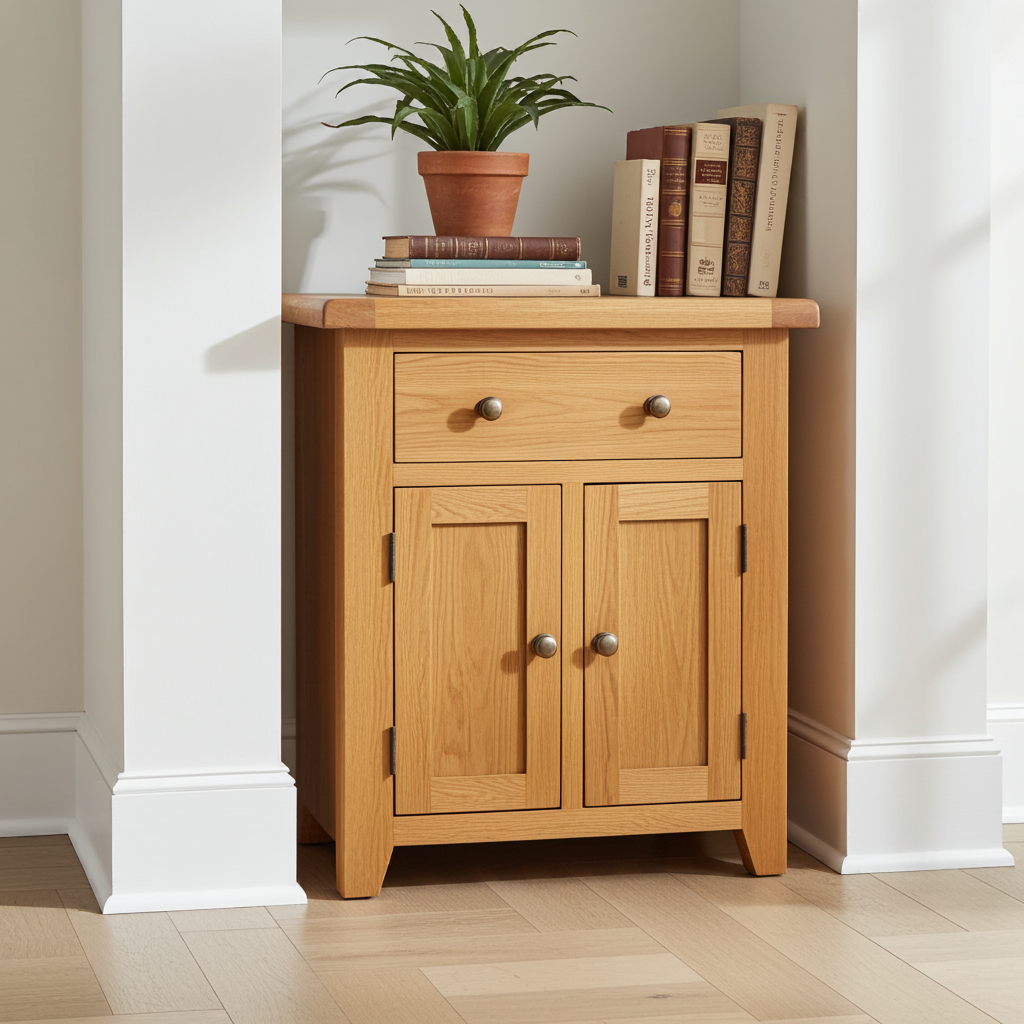
Oak sideboards are one of the most practical ways to bring oak into a home. On the positive side, you get strong storage, a generous top surface, and a solid focal point in the room. A quality solid oak sideboard at around £429.00 offers real heft, which helps it stay stable even when you pack it with crockery or games.
The downside is footprint and weight. In a very small room, a full size sideboard can feel dominating. This is where compact or small oak sideboards come in, giving you the same material benefits with less visual and physical bulk.
| Pros of oak sideboards | Cons of oak sideboards |
|---|---|
|
|
We also see many customers asking about pine vs oak sideboards. Pine can be cheaper and lighter, but it dents more easily and often does not have the same long term value. Oak tends to be the better choice if you want a sideboard that still looks and feels solid after many years of use.
6. Pros and Cons of an Oak Dining Table
An oak dining table is often the workhorse of the home, used for meals, homework, and sometimes home working. The main advantage here is strength. With a solid oak top and sturdy legs, the table can handle daily use, hot dishes on mats, and the occasional bump without feeling fragile. A premium oak dining table at around £849.00 is designed with that in mind.
Because oak is heavy and dense, an oak dining table tends to feel planted rather than wobbly. That stability is a real plus for families, though it does mean you might need two people to move it for cleaning or rearranging.
What to watch for with oak dining tables
- Size vs room: oak tables can visually dominate, so measure carefully and allow room for chairs and movement.
- Finish choice: some finishes highlight the grain but need more care, others are more sealed and forgiving.
- Movement: good construction allows for natural wood movement so tops stay flat over the years.
If you like to host occasionally but have limited space, an extendable oak dining table can give you the best of both worlds. Closed, it is compact for daily life. Open, it handles guests without needing a second table.

7. Pros and Cons of Oak Bedroom Furniture
Oak bedroom furniture, including beds, dressers, and wardrobes, offers the same durability advantages as living and dining pieces. Oak bed frames can feel rock solid, which helps reduce creaks and movement. Oak wardrobes bring strong rails and shelves that cope with real world loads.
The main trade off is again weight and cost. A full bedroom set in solid oak will be heavier and more expensive than similar sized softwood or flat pack furniture. That said, many people prefer to buy one good set rather than replace cheaper pieces repeatedly.
Where oak works best in the bedroom
- Bed frames and headboards that take repeated loading.
- Chests of drawers that are opened and closed many times a day.
- Wardrobe doors and frames that need to stay aligned over the long term.
Many ranges use a combination of solid oak and oak veneers in the bedroom to balance cost, weight, and stability. For example, frames and legs may be solid, while large panels use quality veneer over a stable core to keep everything straight.

8. Pros and Cons of an Oak TV Stand or Oak TV Unit
An oak TV stand is one of the most common entry points into oak furniture for living rooms. Our own oak TV unit suitable for up to 50 inch TVs is priced at around £132.00 and offers a solid top, one large drawer, and an open compartment for media devices. The big advantage here is stability and weight, which helps support your screen securely.
Another plus is that oak hides everyday wear nicely. Minor knocks on the edges of an oak TV stand usually blend into the grain instead of showing bright chips like laminated chipboard often does.
Potential downsides of an oak TV stand
- Weight: larger units for 60 inch TVs and above can be very heavy.
- Depth: some oak units are quite deep, which may be an issue in very compact rooms.
- Cost: solid oak versions cost more than flat pack options, especially in bigger sizes.
If you have a large screen, something like a fully assembled oak TV unit suitable for 60 inch TVs at around £477.00 gives you doors for hidden storage and an open shelf for consoles. You just need to be happy with the weight and check your room size before ordering.
9. Cost vs Longevity: Is Oak Furniture Worth It?
When you look at the price tag of a solid oak sideboard at roughly £429.00, an oak dining table at about £849.00, or a three door oak hutch at around £952.00, they clearly sit above entry level budget furniture. The question is whether that extra spend pays off over time.
We encourage people to think in terms of cost per year of use. A cheaper piece that needs replacing every few years can work out more expensive than a more costly oak item that still feels solid after a decade or more. There is also the comfort of knowing that drawers, doors, and tops are less likely to fail under everyday loads.

Tip: If you are on a tighter budget, consider starting with one or two key oak pieces, such as a small oak sideboard or a compact oak TV stand, then adding more over time.
There is also a sustainability angle. Buying one long lasting oak piece instead of multiple disposable ones helps reduce waste. As long as the wood is sourced responsibly, many people are comfortable paying a small premium for that combination of durability and sustainability.
10. Caring For Oak Furniture: Reducing the Downsides
One of the best ways to tip the balance of pros and cons in your favour is simple care. Oak does not need complicated routines, but a few habits make a big difference to how it ages. Using coasters and placemats, wiping spills quickly, and keeping furniture out of harsh direct sunlight where possible all help.
Finishes matter here too. Some water based stains on oak can show blotching, which is why many makers and refinishers like gel stains or sealed finishes that give more even colour. For most ready finished pieces, a gentle furniture cleaner and occasional re application of oil or wax, if the finish allows, will be enough.
Simple habits to keep oak looking its best
- Dust with a soft, slightly damp cloth rather than a dry one that can drag grit.
- Avoid harsh cleaners or polishes with silicone that can build up over time.
- If in doubt about re oiling or waxing, test in a discreet area first.
Handled this way, the natural patina that oak develops is a positive, not a downside. Small marks and colour changes tend to add character rather than making the furniture look tired.
Conclusion
Oak furniture has clear strengths. It is strong, stable, and visually timeless, which makes it a sensible choice for items that see daily use, such as oak sideboards, oak dining tables, oak bedroom furniture, and an oak TV stand. With basic care, these pieces can serve you for many years and still feel solid.
The trade offs are real too, mainly weight, higher initial cost, and a bit more attention to placement and finishes. If you value durability, a natural look, and the feeling of real wood, the pros usually outweigh the cons. If you prefer very light, low maintenance, and disposable furniture, oak might feel like overkill. Our view is that for most households, choosing a few well made oak pieces is a practical way to get long term value and a home that feels grounded and comfortable.