
If you have ever fallen for a beautiful sideboard, brought it home and then realised it feels too tall or oddly low, you are not alone. Getting the height right affects how a sideboard looks, how comfortable it is to use and how well it works with everything from your oak dining table to your oak TV stand. In this guide, we share the practical height rules we use when helping customers choose sideboards for real UK homes.
Key Takeaways
| Question | Short Answer |
|---|---|
| What is the standard height for a sideboard? | Most sideboards sit between 81 cm and 92 cm high (about 32 to 36 inches), which works well in most dining and living rooms. |
| How tall should a sideboard be in the dining room? | Ideally, close to standard dining table height, usually around 75 to 90 cm, so serving and access are comfortable. |
| What height sideboard is best for a living room? | Use the back of your sofa as a guide. A sideboard that is level with or slightly lower than the sofa back looks balanced. |
| Does room size change what height a sideboard should be? | Yes. Small rooms often suit slightly lower and narrower sideboards. Our dedicated guide to sizes for compact pieces is here: UK sizing guide for small oak sideboards. |
| How do I know if a sideboard height will feel right? | Measure from your floor to your elbow with your arm bent at 90 degrees. A sideboard top that sits 10–20 cm below that point usually feels natural for serving and everyday use. |
| Where can I learn more about sideboard height and scale? | We have a detailed guide that breaks down proportions room by room: sideboard height and scale guide. |
| What if I just want to browse sideboards in the right sort of size? | You can explore our living room range, including sideboards, here: living room furniture collection. |
Products by Category
-
Compact and Stylish Small Sideboard Oak for Efficient Storage
Original price was: £600.00.£430.00Current price is: £430.00. -
Elegant 2-Door Oak Sideboard
Original price was: £700.00.£500.00Current price is: £500.00. -
Large Rustic Sideboard
Original price was: £700.00.£475.00Current price is: £475.00. -
Large Sideboard
Original price was: £960.00.£625.00Current price is: £625.00. -
Large Solid Oak Sideboard – 137cm Wide, 3-Door 3-Drawer Storage Cabinet, Fully Assembled
Original price was: £600.00.£460.00Current price is: £460.00. -
Light Grey Painted 2 Door 3 Drawer Sideboard
Original price was: £637.50.£425.00Current price is: £425.00. -
Light Grey Painted Cabinet
Original price was: £367.50.£245.00Current price is: £245.00. -
Light Grey Painted Large Sideboard
Original price was: £675.00.£450.00Current price is: £450.00. -
Light Grey Painted Small Sideboard
Original price was: £435.00.£290.00Current price is: £290.00.


1. Standard Sideboard Heights: The Simple Starting Point
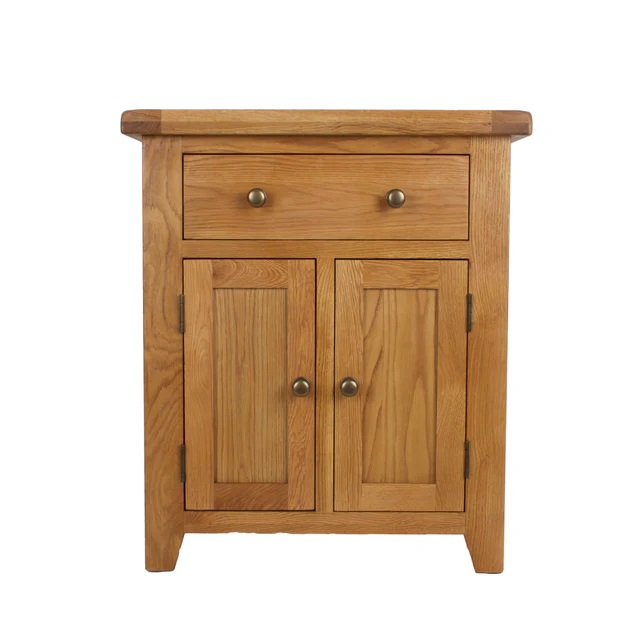
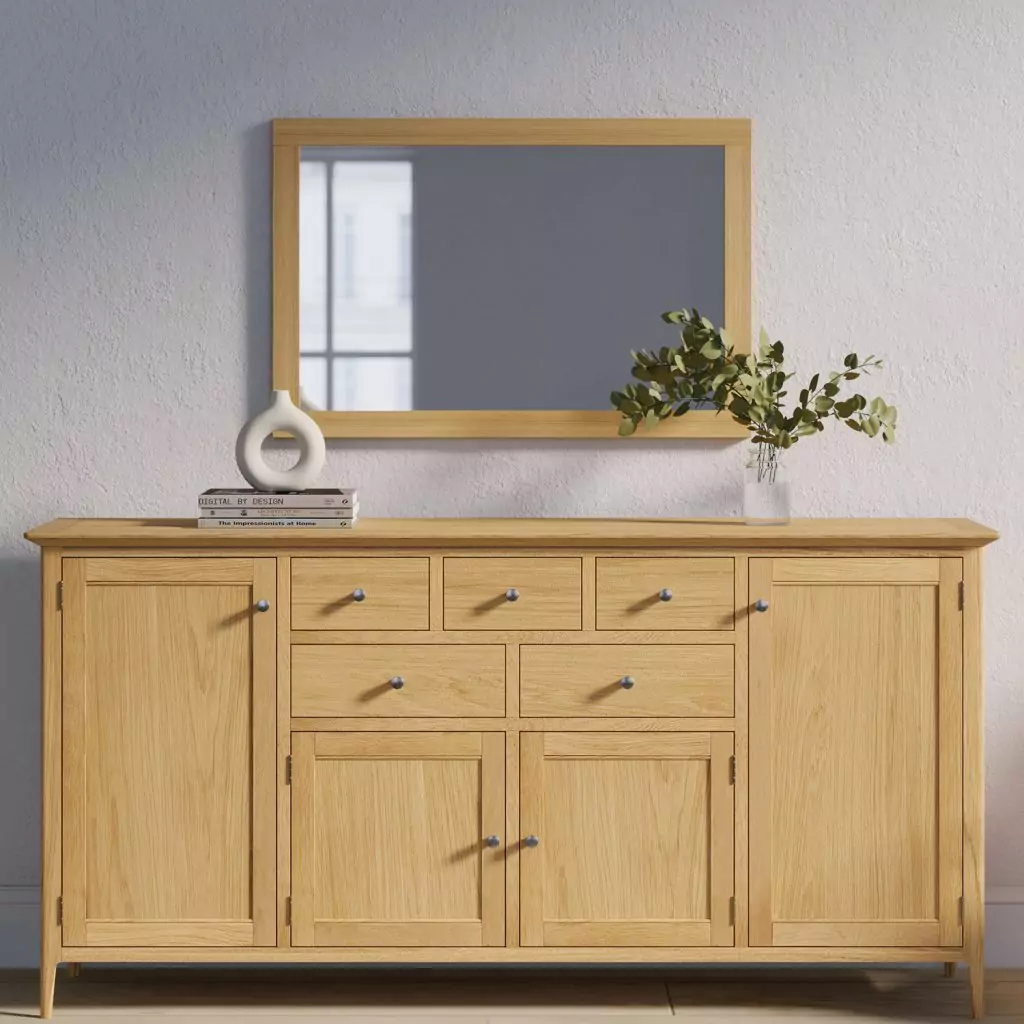
When customers ask us what height a sideboard should be, we usually start with a simple range. For most homes, the sweet spot is around 81 to 92 cm high. In inches, that is roughly 32 to 36 inches, which is the traditional buffet or credenza height you see in many dining rooms.
This range works because it is high enough to store plenty of items, yet low enough that you can easily reach the top to serve food, style decor or place a lamp. It also pairs well with most oak furniture, especially if you already have an oak dining table or an oak TV stand and want the room to feel consistent.
2. The Classic Dining Room Rule: Match Your Oak Dining Table
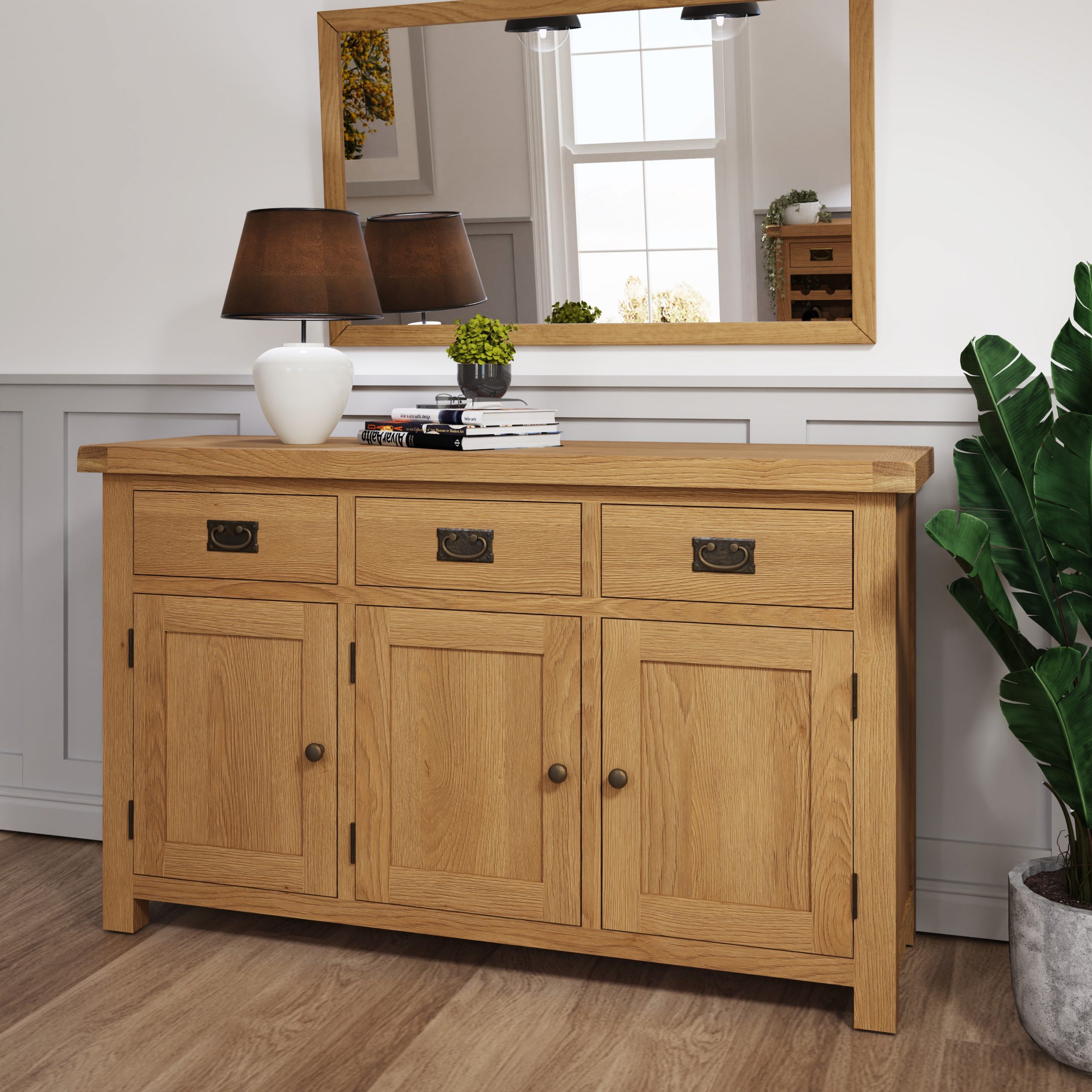
In the dining room, your sideboard height should work with your dining table. Standard dining tables are usually around 75 cm high. A sideboard that is slightly taller, typically 80 to 95 cm, feels practical and looks balanced next to the table and chairs.
If you serve from the sideboard, you want the top to be a comfortable level for setting out dishes and drinks. With oak sideboards, we often suggest choosing a height that lines up visually with the back of the chairs or sits just above, so the pieces feel like they belong together as part of a coordinated set of oak furniture.
3. Ideal Sideboard Height In The Living Room
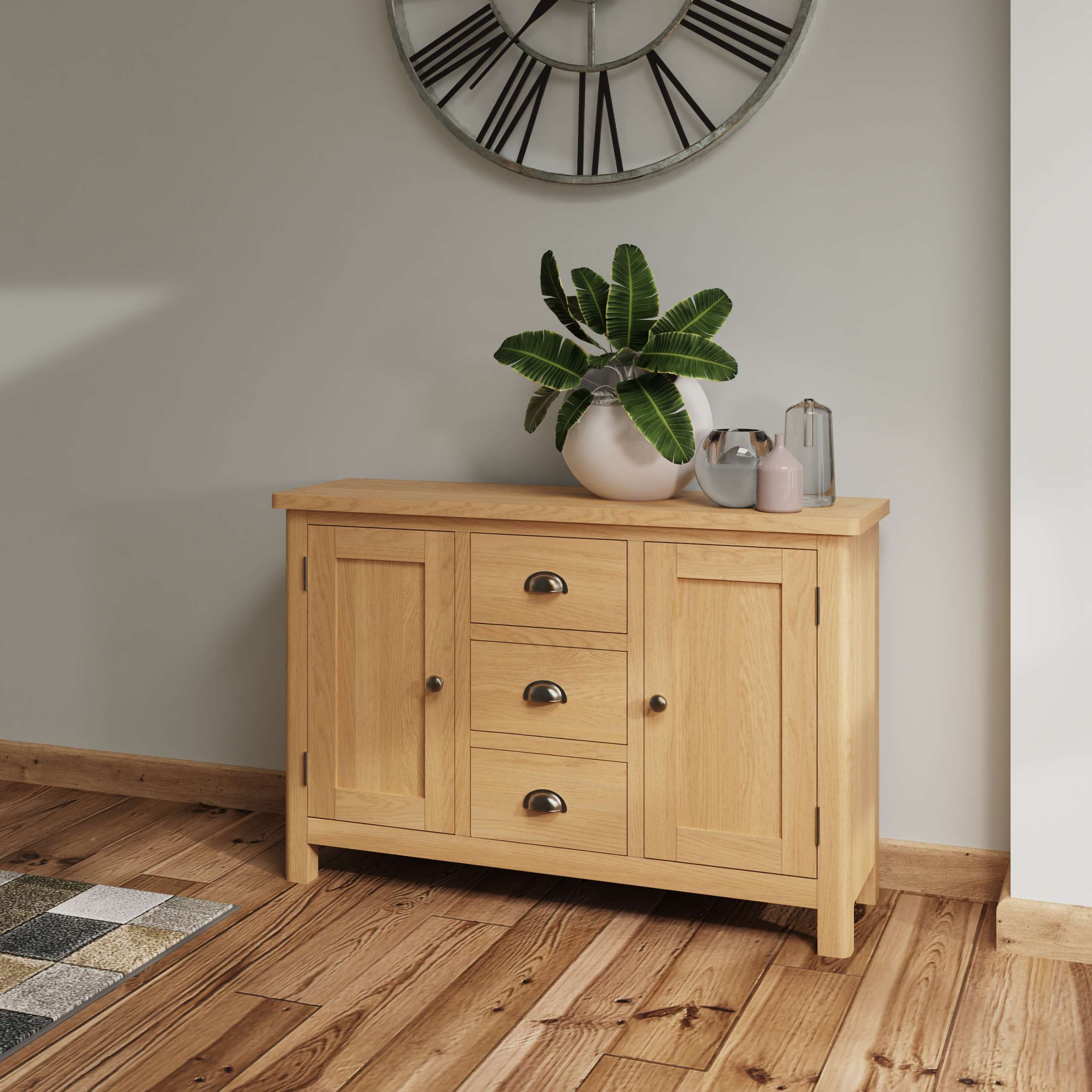
In the living room, the height question is slightly different. Instead of thinking about dining chairs, we look at the sofa and any nearby oak TV stand or media unit. The back of your sofa is a very useful visual reference. A sideboard that is level with or a little lower than the back of the sofa usually looks best.
If your living room also has an oak TV unit, keep heights in the same rough zone so the room does not feel bitty. For example, if your TV stand is 55 cm high and your sofa back is 90 cm, you might choose a sideboard somewhere around 80 to 90 cm to sit comfortably between the two.
4. When A Low Sideboard Height Works Better
Not every sideboard has to be at traditional buffet height. Lower sideboards in the 60 to 75 cm range can be a good fit in modern, relaxed spaces, especially if your ceilings are low or you have a lot of artwork or shelving above. They also suit compact living rooms where a full height unit might feel imposing.
Low sideboards act almost like extra-long console tables. They can support a TV, display decor and keep storage easy to reach for children. When we design rooms with a mix of oak bedroom furniture and living room pieces, we often use lower units on walls with windows to keep sight lines open.
5. Compact Oak Sideboards: Height For Smaller Spaces
If you are working with a hallway, a small dining nook or a compact living room, you may be looking at narrow or small oak sideboards. These often keep the height similar to standard units, while the width and depth shrink to fit tight spots. This helps you gain storage without losing surface area at a practical height.
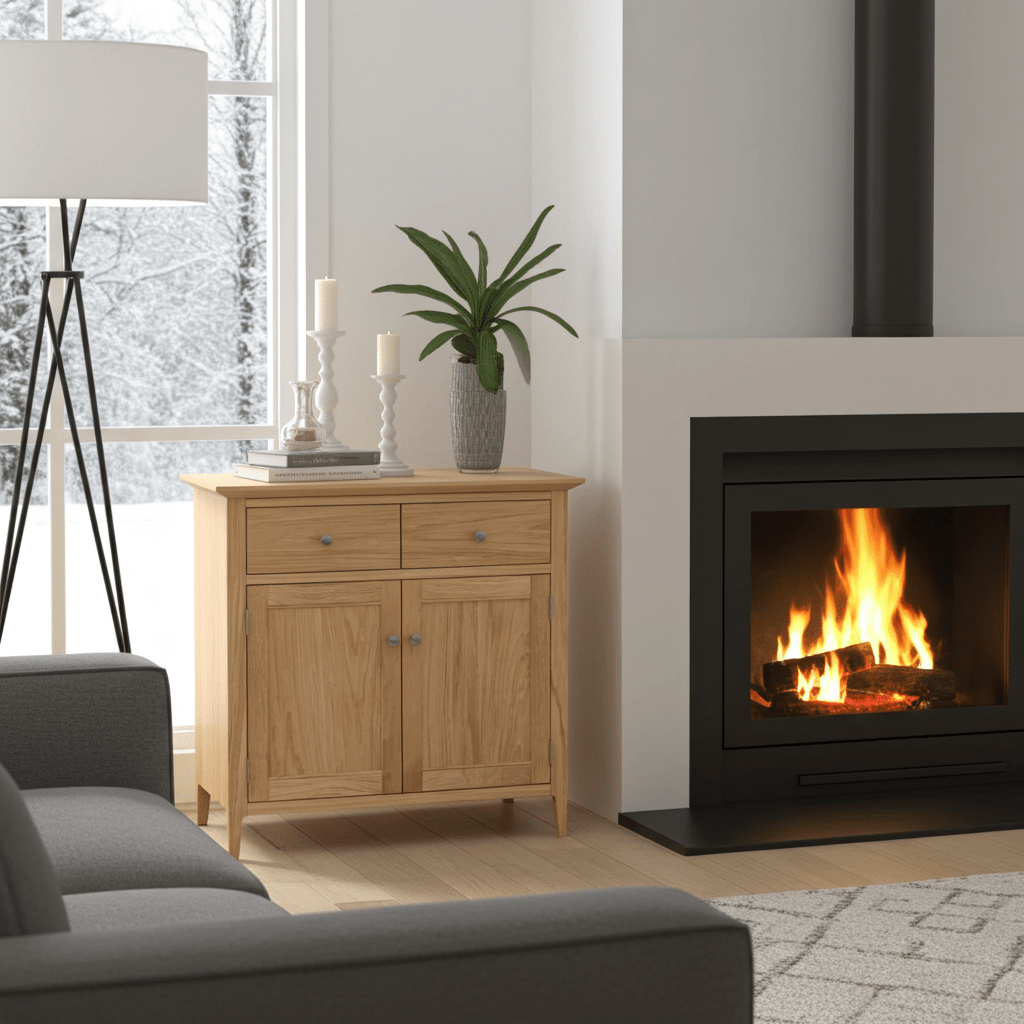
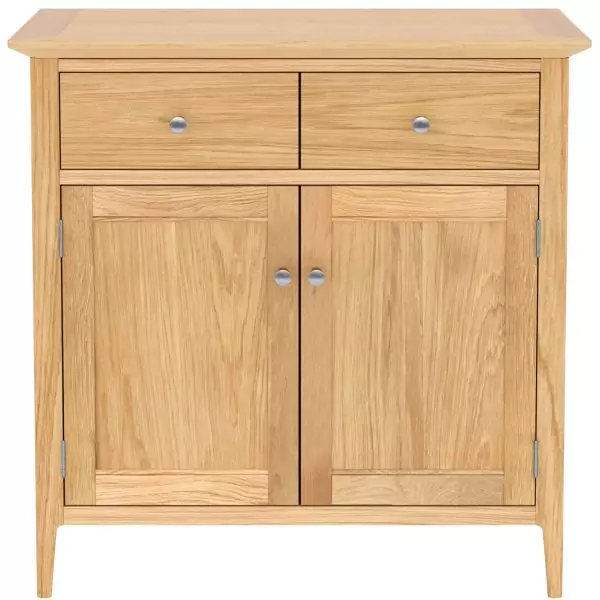
Our London Oak Small Sideboard, for example, has dimensions of Width 75 cm, Height 76.5 cm, Depth 34 cm and comes ready assembled at £265.00. At just under the classic 80 cm mark, it still feels like a full sideboard, just in a shorter width, which works well alongside a smaller oak dining table or as extra storage opposite an oak TV stand.
6. Hallways And Narrow Rooms: Sideboard Height Versus Depth
In hallways and other narrow rooms, the depth of the unit can matter as much as the height. A tall but shallow sideboard can feel elegant and space efficient, while a deep unit at the same height might feel intrusive. We normally advise keeping hallway sideboards at a height of 80 to 90 cm, but with a depth around 30 to 35 cm.
Our compact painted and oak-topped pieces are a good example of this approach. A narrower footprint at a comfortable hand height gives you a useful landing spot for keys and mail, without blocking the flow of the space.

7. Painted Sideboards With Oak Tops: Balancing Height And Visual Weight
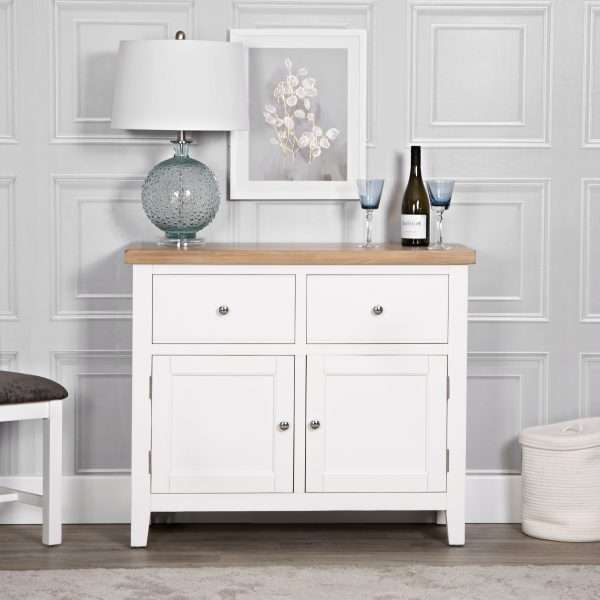
Painted sideboards with oak tops, especially in white or grey, often feel lighter in a room than full oak sideboards, even at the same height. This means you can sometimes get away with a slightly taller height in a small room if the base is painted and the oak is only on the top surface.
A good example is our White Painted Sideboard with Oak Top, priced at £360.00. The white body keeps the unit visually light while the oak top helps tie it into other oak furniture in your home, whether that is oak bedroom furniture in an adjoining room or an oak TV stand in the same open plan space.
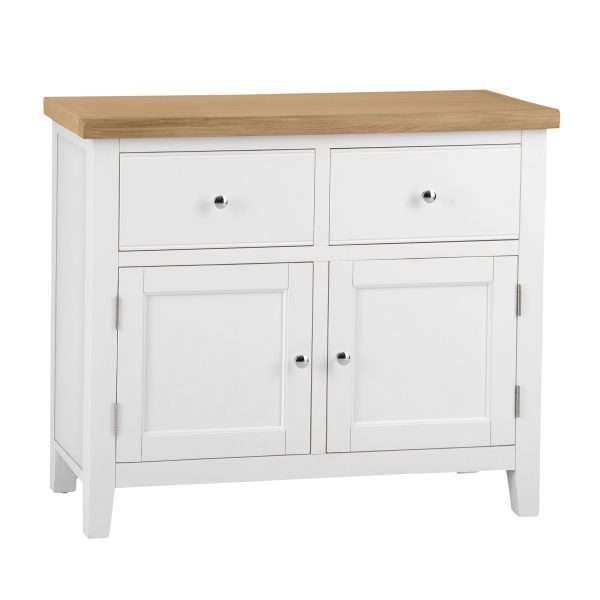
8. Grey And White Sideboards: Matching Height Across A Room
If you mix finishes, for example a grey sideboard with a natural oak dining table, height becomes a useful way to link the pieces. Consistent height lines around a room create a calm look, even if the colours or materials differ. We often suggest keeping sideboards and display units within 5 cm of each other in height when they share a wall.
Our Compact Small Grey Sideboard at £295.00 and our white narrow sideboard at £295.00 are designed as practical storage for smaller spaces, but both sit in that comfortable sideboard-height zone. That means you can pair them with oak furniture without worrying that one piece will visually dominate the other just because it is too tall or too low.


9. How Sideboard Height Interacts With Other Oak Furniture
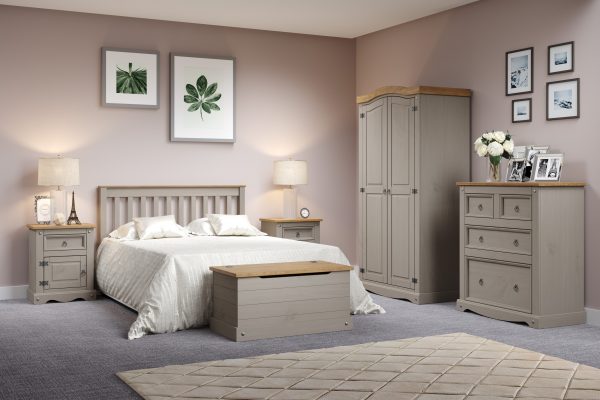
Sideboard height does not exist in isolation. In many homes, it needs to work with an oak dining table in one zone, an oak TV stand in another and potentially oak bedroom furniture in an adjacent space if you have an open plan layout or a studio. When heights feel related, the whole space feels more considered. Check out our oak furniture buyers guide for more information.
As a rule of thumb, try to keep major horizontal surfaces within 10–15 cm of each other where they are visually connected. For example, if your oak TV stand is 50 cm high and your oak sideboard is 85 cm high, you might choose bedside tables in your bedroom somewhere around the 55–60 cm range so each area has its own logic but still feels loosely aligned.
10. Practical Measuring Tips To Choose The Right Height
Before you order a sideboard, we always recommend a quick measuring routine. First, measure the height of nearby key pieces, such as your dining table, sofa back or oak TV stand. Second, mark the proposed sideboard height on the wall with low tack tape so you can stand back and see how it feels.
You can also use your own body as a guide. Stand where the sideboard will go, bend your elbow to 90 degrees and measure down around 10–20 cm. That range will usually feel natural for serving, decorating and everyday use. Finally, remember to allow extra space above if you plan to hang a mirror or artwork, so the sideboard does not crowd the wall.
Conclusion
The right height for a sideboard depends on how you use it and what it sits next to, but most homes work well with a height in the 81 to 92 cm range. From compact oak sideboards at around 76.5 cm high to painted pieces that share the same comfortable working height as your dining table, the goal is always the same: storage that feels natural to use and looks in proportion to your room.
When you are deciding, think about your existing oak furniture, the height of your sofa or oak TV stand, and how much wall space you want above the unit for mirrors or artwork. With a tape measure, a few quick checks and a clear target range, you can choose a sideboard height that genuinely suits the way you live, rather than relying on guesswork or trends that do not match your space.